Best File Manager App for iPhone: Files & Transfer Fixes

Quick Takeaways: iPhone file managers
TL;DR: Apple Files is the best file manager for iPhone basics, including downloads and supported servers. Choose Documents by Readdle for richer on-device document work, or Owlfiles for NAS and remote connections. Check paid feature limits before switching. AltTunes handles iPhone exports on Windows; WALTR PRO sends media from a computer to iPhone. Neither desktop app replaces an on-device browser.
Tool | Best for |
|---|---|
Apple Files | Free everyday browsing and downloads |
Documents by Readdle | On-device documents and media |
Owlfiles | NAS and remote connections |
Before we begin
Need iPhone files on a Windows PC? Download AltTunes for local exports and backups. It runs on Windows, not on your iPhone, and does not replace Files for on-device browsing. Connect with a data-capable cable and approve the Trust prompt.
Why listen to us?
Softorino makes AltTunes and WALTR PRO and publishes this guide. We still recommend Apple Files first for basic browsing. This review uses official guides, not hands-on tests or speed checks. The screenshots come from the original tutorials, not new tests.
Full comparison table
Tool | Where it runs | Best for | Key capability | Cost model | Main limit |
|---|---|---|---|---|---|
Apple Files | iPhone / iPad | Downloads and basic folders | Local, cloud and supported server access | Included | No unrestricted private app access |
Documents by Readdle | iPhone / iPad | Document and media work | PDF, ZIP, media and cloud tools | Free core; paid upgrades | Advanced tools need an upgrade |
FileBrowser | iPhone / iPad | Remote folders | Computer, cloud, FTP/SFTP and WebDAV access | One-off base app; GO subscription | SMB3 encrypted shares need GO |
Owlfiles | iPhone / iPad; other platforms available | NAS and remote connections | SMB, NFS, WebDAV, FTP/SFTP | Free download; Pro upgrades | Unlimited connections and sync need Pro |
AltTunes | Windows 10 / 11 | iPhone exports and backups | Supported data exports to a PC | Paid with trial; subscription offer | Not an iOS browser; check device support |
WALTR PRO | Mac / Windows | Send media to iPhone | Drag-and-drop file transfer | Paid with trial; subscription offer | Not backup or extraction software |
Apple Devices | Windows | Supported app documents | Cable-based file sharing | Free | Only apps supporting file sharing |
How we evaluated
We reviewed official product pages, App Store listings and Apple guides on October 24, 2026. Our criteria cover where each app runs, which way files move, storage access and paid limits. Our picks follow those facts, not speed tests or star ratings.
The prices below separate free apps, trials and paid plans. We leave prices unknown where we could not check them. US App Store prices use USD. Prices and offers vary by region. Check the total and renewal terms before you pay.
iOS limits access to private app storage. Choose a file manager based on where your files live and which direction you need to move them.
The comparison above separates on-device browsing from desktop transfer. Free downloads do not mean every advanced feature is free.
If you only need to find a PDF from Safari, start with Files. For documents on Windows, check Apple Devices before buying a tool. Choose a desktop manager when you need broader exports or local backup control.
How to use the iPhone Files app
Apple Files is the default iPhone file manager. It handles the basics well once you know where Apple hides things. Apple also keeps a short support page on finding files, folders, and downloads on iPhone if you want the official version.
Use Files when you need to:
- Open files saved locally under On My iPhone or On My iPad.
- Browse iCloud Drive folders.
- Find Safari downloads.
- Open documents stored in apps that expose folders to Files.
- Browse third-party cloud apps you have added, such as Dropbox, Google Drive, OneDrive, or Box.
- Open files from a connected USB drive or SD card reader.
- Search, sort, tag, rename, move, duplicate, compress, or share files.
1. Open the Files app
- Find the Files app on your Home Screen, or swipe down and search for Files.
- Tap Browse at the bottom.
- Choose a location such as On My iPhone, iCloud Drive, Downloads, a cloud app, or a connected storage device.
2. Where your files are stored
Files can show several storage locations:
- On My iPhone: files saved locally on your device.
- iCloud Drive: files synced across devices through your Apple Account.
- Downloads: the common Safari download location, often inside iCloud Drive.
- Third-party cloud apps: Dropbox, Google Drive, OneDrive, Box, and similar services after you add them to Files.
- Connected storage: USB drives and SD card readers that iOS recognizes.
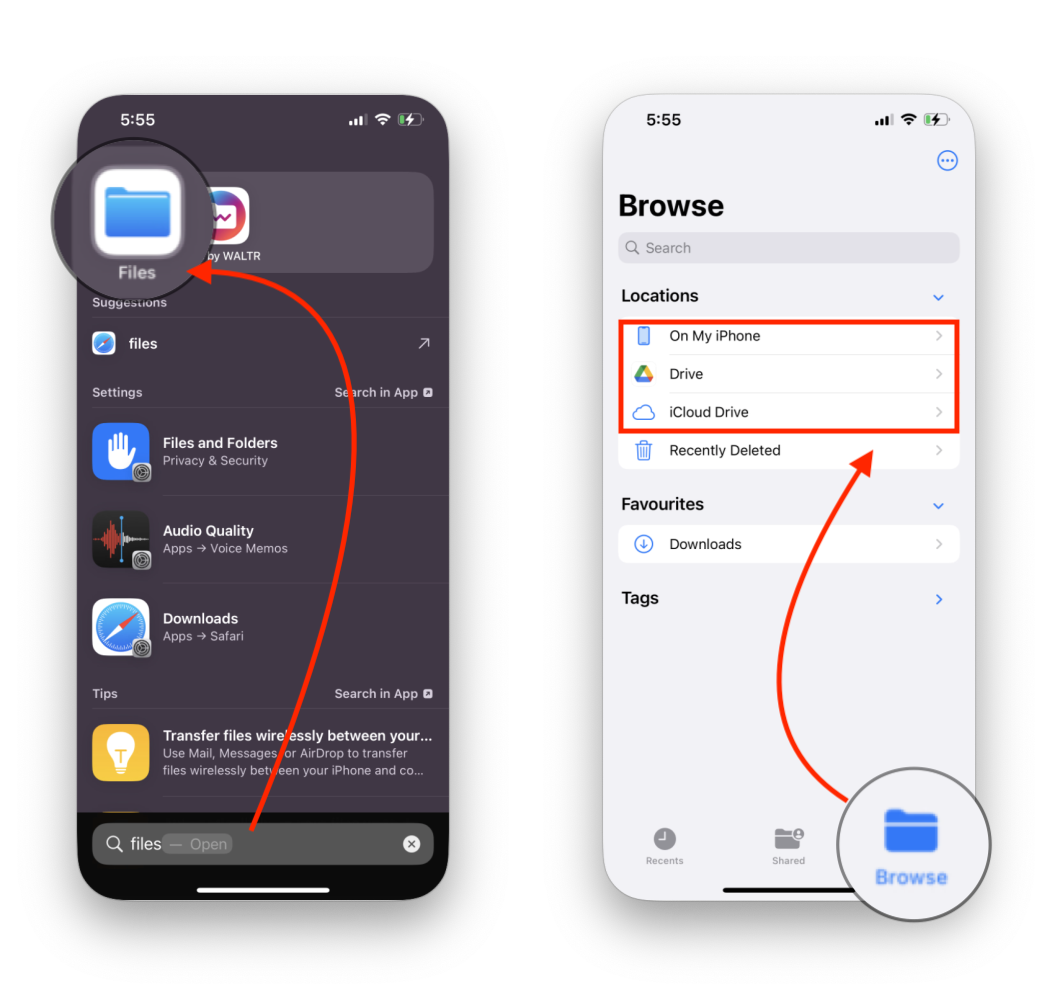
3. Find downloaded files on iPhone
Most downloads end up in the Downloads folder. Try this first:
- Open Files.
- Tap Browse.
- Open iCloud Drive.
- Open Downloads.
- Use the search field if you know part of the file name.
If the file is not there, check On My iPhone > Downloads. Some apps save locally instead of using iCloud Drive.
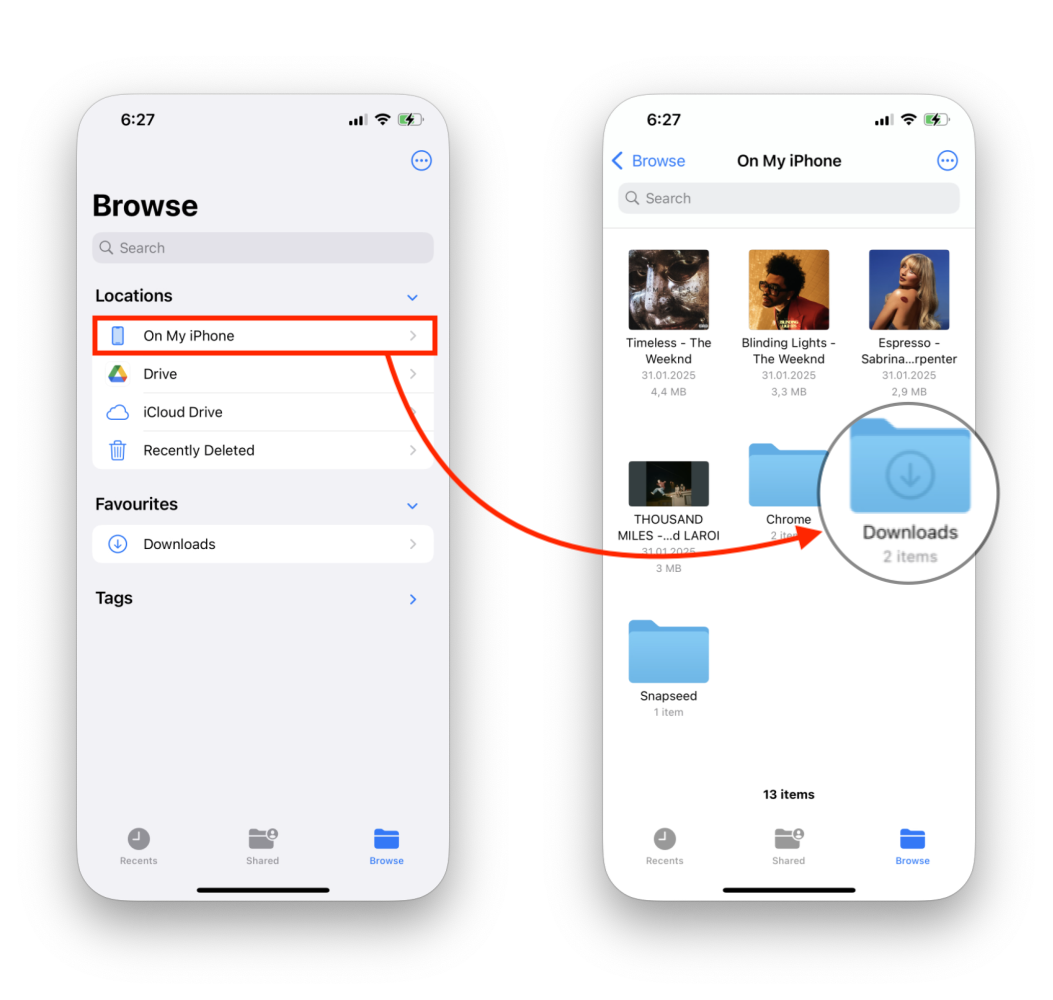
4. File management tips inside Files
Files can handle more than opening PDFs. These basics cover most everyday jobs:
Camera-roll photos and videos live in Photos. Check Photos first unless you saved a separate copy to Files.
- Press and hold a file to rename, move, duplicate, compress, delete, tag or share it.
- Tap the 3-dot menu to create a folder, change sorting or select multiple files.
- Use tags to group files across folders.
- Add cloud services through their apps, then enable them inside Files.
- For offline iCloud files, touch and hold the file and choose Keep Downloaded. If the option is absent, Apple says the file is already on your iPhone.
Why the Files app is not enough for every job
Apple Files covers everyday browsing and supported server connections. It cannot expose every app’s private storage. More advanced PDF work, remote protocols or device backups may need a separate tool.
Try native server access before installing another app. Apple documents this in its server and offline-file guide.
In Files, tap Browse, open the More menu and choose Connect to Server. Enter the hostname or network address, then choose Guest if allowed or Registered User. Sign in and select the shared folder.
For jobs beyond those basics, match the limitation to the tool:
- Private app storage: check the app’s own export options. A different file manager does not remove iOS access rules.
- Advanced PDF editing: compare Documents by Readdle’s paid tools with the free core.
- FTP/SFTP, WebDAV or advanced network workflows: check FileBrowser or Owlfiles and the required edition.
- Windows exports and local backups: consider AltTunes, or Apple Devices for supported app documents.
- Computer-to-iPhone music, video and book transfers: consider WALTR PRO.
Best iPhone file manager apps compared
Apple Files: best free option for basics
Apple Files is the free starting point for downloads, iCloud Drive, local folders, external storage and supported cloud apps. Try Connect to Server for a compatible shared folder before choosing a network specialist.
Use it for everyday file browsing. Do not expect it to act like a full desktop file explorer.
Apple Files key features
- Browse local folders, iCloud Drive, connected storage and supported servers.
- Rename, tag, search, compress and share files.
Apple Files pros
- Included with iPhone; start here before buying a separate browser.
Apple Files cons
Choose another tool when you need:
- Advanced PDF editing.
- An in-app browser download manager.
- FTP/SFTP, WebDAV or network features your Files setup lacks.
- Broader device-data exports and local backups from Windows.
Apple Files pricing
- Included with iPhone at no separate app charge. Extra cloud storage is a separate purchase.
Who Apple Files is best for
Best for: Safari downloads, iCloud Drive, folders, tags, search and basic server access.
Documents by Readdle: best on-device iPhone file manager for most power users
Documents by Readdle suits people who want to work on the iPhone itself. Its free core combines file management, media playback, transfers and cloud access. Deeper PDF editing and unlimited conversions need an upgrade.
Documents by Readdle key features
- Manage documents, play media and connect cloud accounts.
- Use PDF and conversion tools; check which features require payment.
Documents by Readdle pros
- Document and media work stay in one iPhone app rather than a desktop transfer tool.
Documents by Readdle cons
Some conversions use an online service. Do not assume every operation stays offline. Documents also follows iOS limits on private app storage.
Documents by Readdle pricing
- The core app is free; advanced tools cost extra. Check your App Store for the current plan price. The free/paid split comes from our October 20 review.
Who Documents by Readdle is best for
Best for these on-device jobs:
- PDFs
- ZIP files
- Media playback
- Browser downloads
- Cloud storage
- Local folders inside the app
FileBrowser and Owlfiles: advanced network file access
For a compatible shared folder, try Apple Files first. FileBrowser and Owlfiles are worth comparing when you need other protocols, multiple remote locations or advanced folder tools.
FileBrowser: remote folders with edition choices
Choose FileBrowser for computer, cloud and remote-folder access on iPhone. Check the base app against FileBrowserGO before you pay.
FileBrowser key features
- Access computer and cloud folders.
- Connect using FTP, FTPS, SFTP or WebDAV.
FileBrowser pros
- The base app is a one-off purchase rather than a required GO subscription.
FileBrowser cons
- The vendor lists SMB3 encrypted shares as FileBrowserGO-only.
- Server permissions and network access still apply.
FileBrowser pricing
- Buy FileBrowser once, or pay for a FileBrowserGO plan with a 14-day trial. We did not verify the exact price in each region on October 24, 2026.
Who FileBrowser is best for
- People who need remote folders that their Apple Files setup cannot reach.
Owlfiles: NAS and multiple remote locations
Choose Owlfiles for NAS and remote-folder work, especially when you need its listed NFS or SFTP support. Check the Pro limits before connecting every storage account.
Owlfiles key features
- Access SMB, NFS, WebDAV, FTP and SFTP services.
- Browse local files, computers, NAS and cloud storage.
Owlfiles pros
- A free download lets you inspect the app before choosing a paid edition.
Owlfiles cons
- Unlimited connections, batch rename, backup and sync are Pro features.
- Your server must permit the protocol and account you use.
Owlfiles pricing
- The US App Store listing checked October 24, 2026 lists Pro at USD $1.99/month, $12.99/year or $29.99 lifetime. The app is free to download. Promotional and regional prices may differ.
Who Owlfiles is best for
- People with a NAS or several remote drives who need the paid features.
AltTunes: best iPhone file manager for Windows transfer and local exports
AltTunes is not an on-device iOS app. It is a Windows desktop iPhone manager for people who want local control from a PC.
Use AltTunes for the Windows side of file management. For a longer setup walkthrough, see how to transfer files from iPhone to PC.
For other desktop options, compare iTunes alternatives. AltTunes documents these export and backup jobs:
AltTunes key features
- Supported iPhone file exports to Windows.
- Photos and videos saved on a PC or external drive.
- Music, messages, contacts, notes and other supported export categories.
- Local iPhone backups at a chosen storage location.
- HEIC-to-JPEG photo export.
AltTunes pros
- Export supported iPhone data to your own Windows storage.
- Choose a local backup location rather than relying only on cloud storage.
AltTunes cons
- Windows only; this is not an on-device iPhone file browser.
- Check current device support: the page reviewed still names iOS 18, not every newer release.
AltTunes pricing
- Paid app with a trial. On October 24, 2026, the page lists a Universal License plan. We did not check the checkout total, currency or renewal terms. Treat the first-payment deal as an offer, not a fixed price.
Who AltTunes is best for
- Windows users who need to export supported data or back up their iPhone, not just browse files.
How to transfer files from iPhone to Windows without iTunes
For supported app documents, Apple Devices on Windows offers cable-based file sharing. It only transfers documents from apps that support file sharing.
Use AltTunes when you need its broader export categories or local backup workflow. The steps below follow Softorino’s documentation. No new on-device testing took place; the existing screenshots illustrate the original guide.
1. Download and install AltTunes
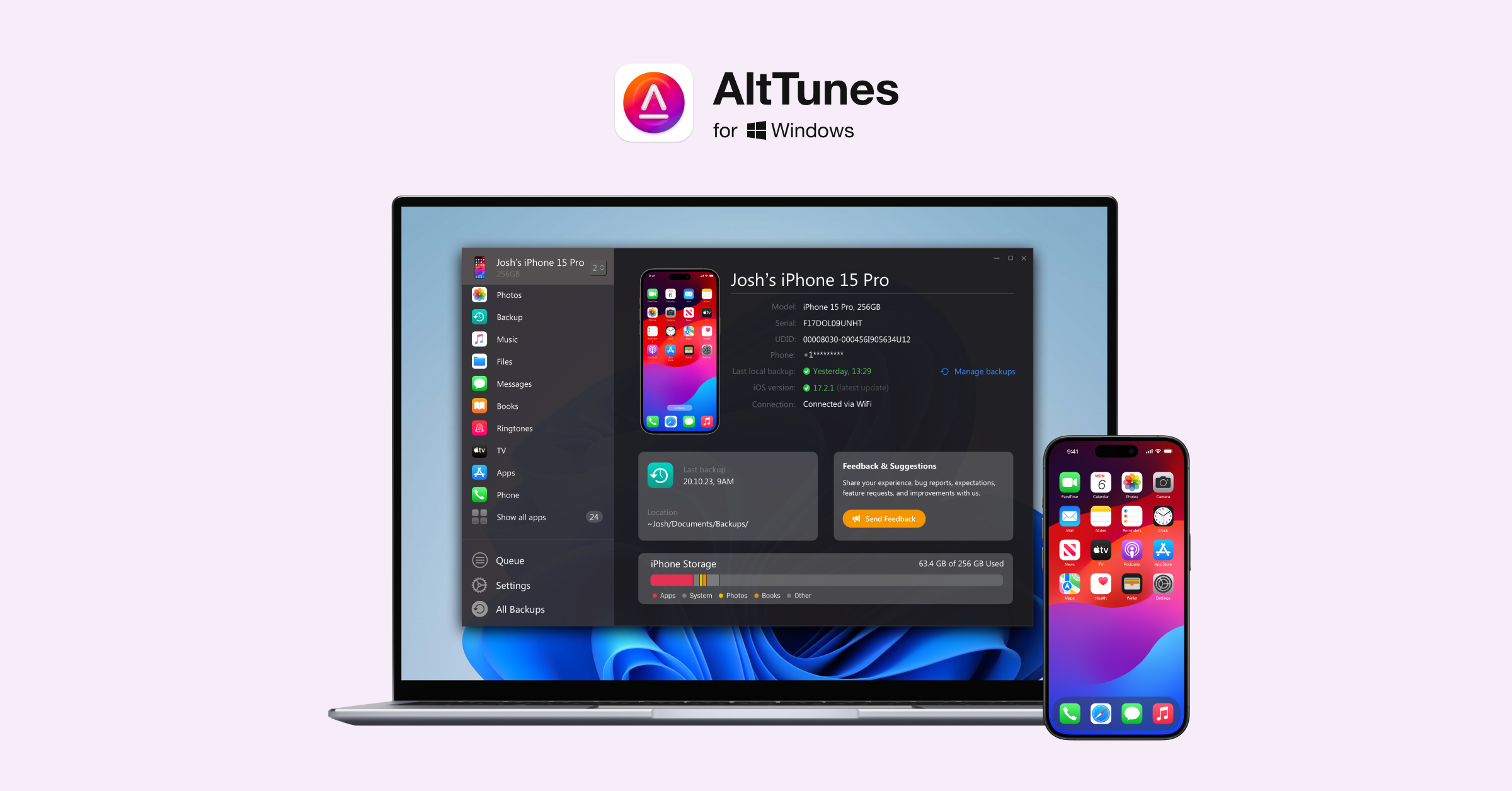
Install AltTunes for Windows. AltTunes works on Windows 10 and Windows 11 and is built for iPhone/iPad data management from a PC.
You can download AltTunes and try it during the free trial period.
2. Connect your iPhone to your PC
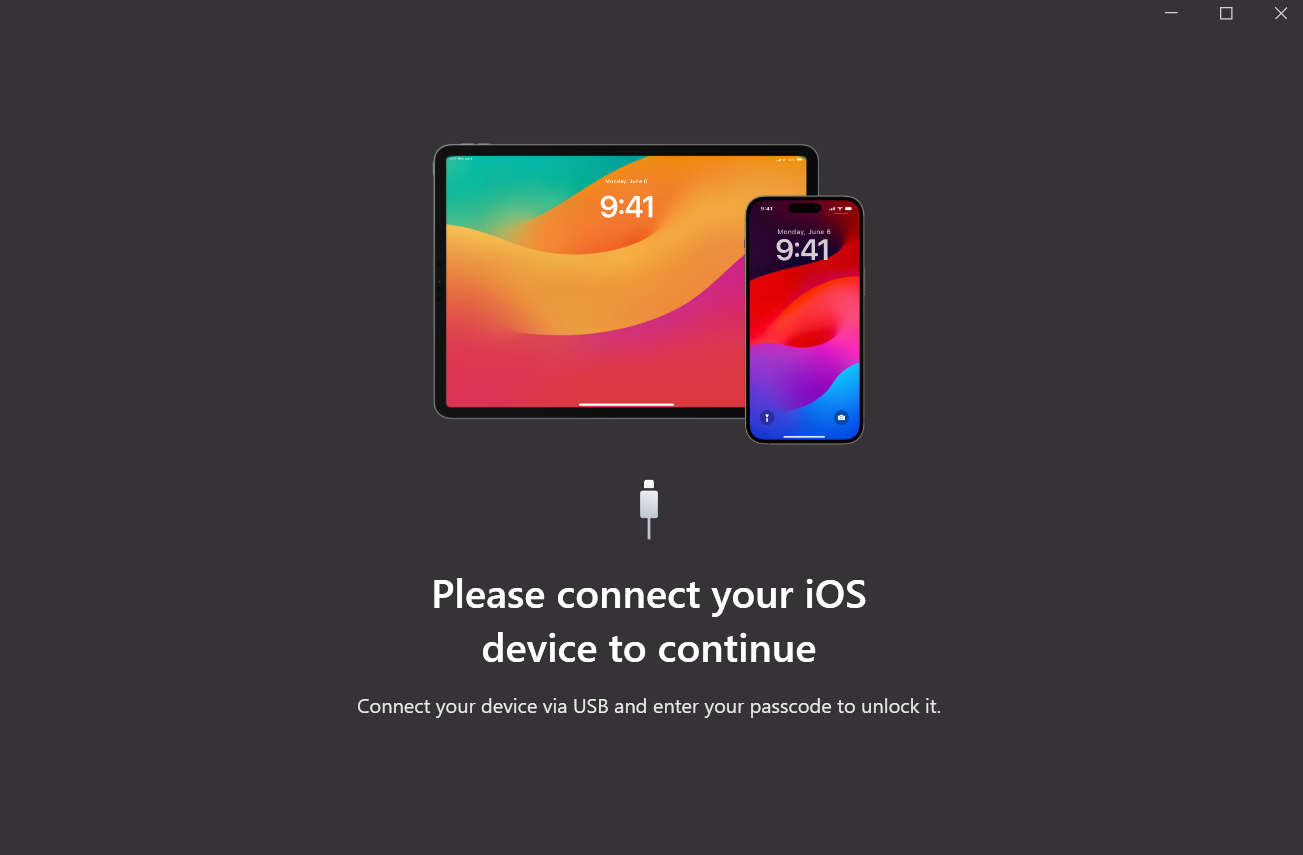
Connect your iPhone with a USB cable. On the first connection, unlock the iPhone and tap Trust This Computer when iOS asks.
After pairing, open your iPhone in AltTunes and choose a supported data category. Keep the cable connected while the operation runs. Check current device compatibility before relying on the app for a backup.
3. Choose the data you want to export or manage
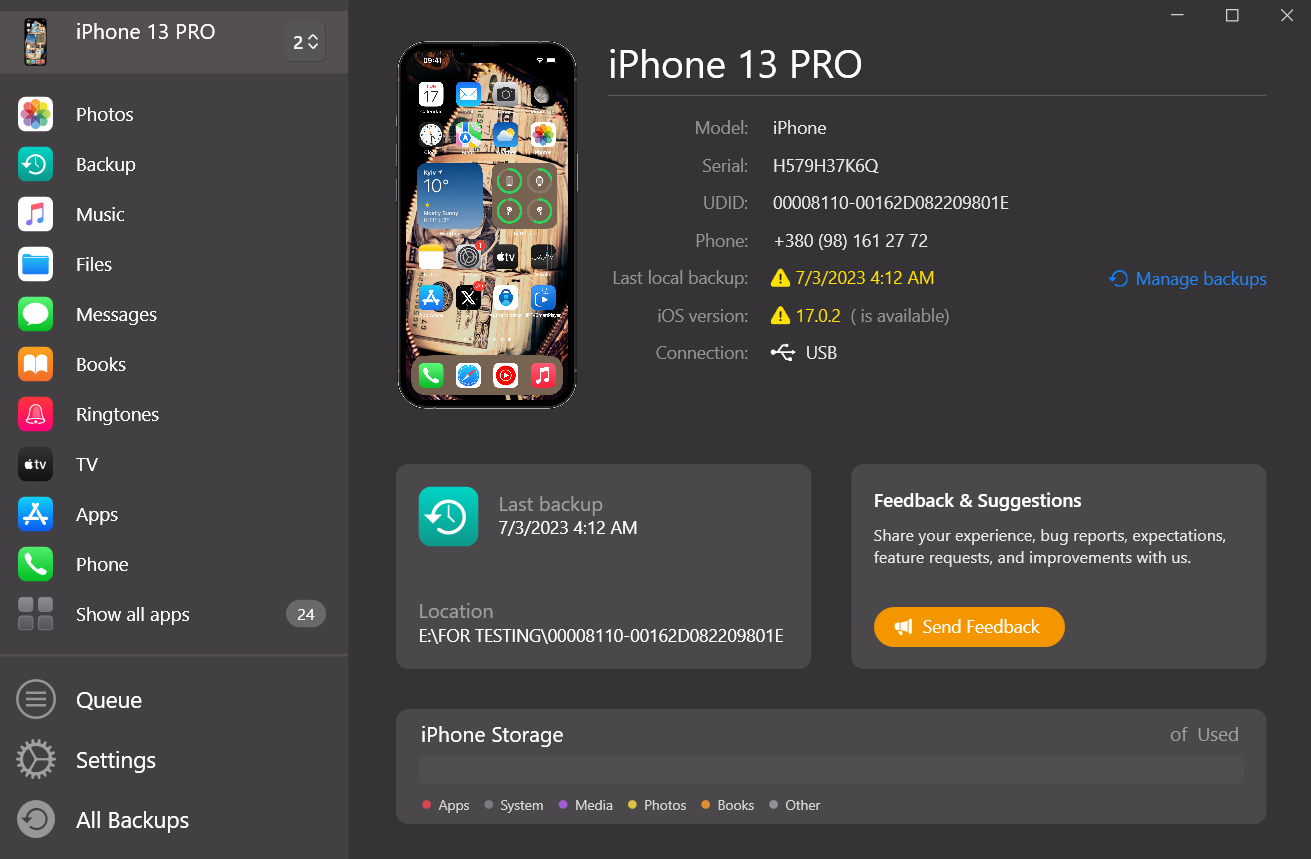
Choose the category you need, such as photos, music, messages, contacts or files. Export access depends on the data type; this is not unrestricted access to every private app folder.
Keep a second copy of important files. Confirm an export opens on your PC before deleting the original.
For a file export, follow this sequence:
- Open your connected iPhone in AltTunes.
- Choose the supported category containing the files or records you need.
- Select the items to export.
- Export to a folder on your PC or external drive.
- Open the destination folder and check the exported files before removing originals.
When to use WALTR PRO instead
WALTR PRO: computer-to-iPhone media transfers
Use WALTR PRO when the transfer direction goes the other way: from Mac or Windows to iPhone.
WALTR PRO is built for drag-and-drop transfers into iPhone and iPad. It can handle music, videos, books, PDFs, subtitles, and other files, including formats like MP3, FLAC, MKV, AVI, MP4, EPUB, PDF, SRT, ASS, and SSA.
The useful part is where files land. Music can go into Apple Music. Videos can go into Apple TV or compatible apps. Books and PDFs can go into Apple Books or supported apps. You skip iTunes sync and manual conversion in many common media workflows.
WALTR PRO sends files to iPhone. AltTunes handles Windows exports and local backup jobs. Neither is a replacement for an on-device file browser.
WALTR PRO key features
Use WALTR PRO for these computer-to-iPhone tasks:
- Adding FLAC, MP3, AAC, or WAV music to iPhone.
- Putting MKV, AVI, MP4, or MOV videos on iPhone.
- Sending EPUB or PDF files to iPhone.
- Adding subtitles with video files.
- Moving files from computer to iPhone without syncing a whole library.
WALTR PRO pros
- Send supported music, video and books into suitable iPhone apps without a whole-library sync.
WALTR PRO cons
- Not an iPhone backup or extraction tool.
- Other file types depend on compatibility with the destination iOS app.
WALTR PRO pricing
- Paid app with a free trial. On October 24, 2026, the page lists a Universal License plan. We did not check the checkout total, currency or renewal terms.
Who WALTR PRO is best for
- Mac or Windows users who want to send their own files to iPhone, not copy data off it.
Apple Devices: supported app documents on Windows
Try Apple Devices before buying a desktop tool if you only need cable transfers for an app that supports file sharing.
Apple Devices key features
- Transfer supported app documents between iPhone and Windows with a cable.
Apple Devices pros
- An Apple option for this narrow document-transfer job.
Apple Devices cons
- Only documents from apps that support file sharing can be transferred.
- This workflow does not expose every app folder or the entire photo library.
Apple Devices pricing
- Free Windows app. Verify that your iPhone app supports file sharing before relying on it.
Who Apple Devices is best for
- Windows users who need to move files for one supported app, not browse all iPhone storage.
How to choose the right app
Pick based on the file job, not the app ranking.
If you only need to find downloads
Use Apple Files. Check iCloud Drive > Downloads, then On My iPhone > Downloads. Search by file name if you remember it.
If your files are in Photos
Open Photos. Camera-roll photos and videos usually do not live in Files unless you manually saved or exported them there.
If you need PDF and ZIP tools
Documents by Readdle combines document browsing, ZIP handling and media tools. Check paid limits if you need advanced PDF editing; basic file management is included in the free core.
If you need NAS or server access
Start with Files > Browse > More > Connect to Server for a supported share. Choose FileBrowser or Owlfiles for protocols or advanced features your setup needs, and verify the edition before paying.
If you need to move iPhone files to Windows
Use AltTunes. It is built for Windows users who want local exports, backups, photos, messages, music, files, contacts, and device data without iTunes.
If you need to send media from computer to iPhone
Use WALTR PRO. It is the better fit for dragging media and documents from Mac or Windows to iPhone and letting the app handle Apple-friendly destinations.
Privacy and safety notes before you install any file manager
File manager apps often ask for cloud access, local network access, file access, or photo-library permissions. That is normal for the category, but you should still be picky.
Local exports can reduce reliance on cloud storage. They do not, by themselves, prove encryption or privacy. Keep another copy of files you cannot replace.
Before granting access or moving sensitive files:
- Read the app’s permissions before connecting a cloud account.
- Check current support docs and update history.
- Use SFTP or HTTPS rather than plain FTP for sensitive files.
- Avoid untrusted networks for private transfers.
- Keep separate backups and inspect exported files before deleting originals.
- Read the encryption details; a private folder label is not proof of an encrypted backup.
Final thoughts: the best file manager app for iPhone depends on the job
Start with Apple Files unless you can name a job it cannot do. That includes trying its built-in server connection for supported shares.
Documents adds richer on-device document and media tools. FileBrowser and Owlfiles cover more remote workflows, with edition-specific limits. AltTunes serves Windows exports and backups; WALTR PRO sends media from a computer to iPhone.
For Windows exports, download the AltTunes trial and check your supported data category. For the opposite direction, download WALTR PRO. If you only need a Safari download, open Files and skip the extra installation.
FAQ
Is there any file manager on my iPhone?
Yes. Every iPhone and iPad includes Apple's Files app. It lets you browse On My iPhone, iCloud Drive, connected storage, and third-party cloud services you add to Files.
What is the best file manager app for iPhone?
Apple Files is the best free starting point for everyday browsing and supported servers. Documents by Readdle adds richer on-device tools. FileBrowser and Owlfiles suit advanced network needs. Choose AltTunes for Windows exports or WALTR PRO for computer-to-iPhone media transfer, not as replacements for an on-device browser.
Where are downloaded files on iPhone?
Most Safari downloads are in Files > Browse > iCloud Drive > Downloads. If they are not there, check Files > Browse > On My iPhone > Downloads, then search by file name.
Is the Files app enough for managing files on iPhone?
Files covers downloads, iCloud Drive, local folders, sharing and supported server connections. Consider other tools for advanced PDF editing, additional network protocols, broader Windows exports or device backups. Files cannot browse every app’s private storage.
How do I access app files on my iPhone?
Open Files and check On My iPhone. Some apps create folders there for their documents. If an app does not appear, iOS may not let Files browse that app's private storage. Check the app's own export or sharing settings.
How do I transfer files from iPhone to PC without iTunes?
Apple Devices transfers documents from apps that support file sharing on Windows. For broader local exports, AltTunes offers supported data categories. Connect and trust the PC, choose your category, then export and check the saved files.
Can I transfer files from PC to iPhone without iTunes?
Yes. WALTR PRO can transfer music, videos, PDFs, books, subtitles, and other files from Mac or Windows to iPhone without iTunes sync. AltTunes also supports Windows-side iPhone management and transfer workflows.
Can iPhone access NAS, SMB, FTP, or WebDAV folders?
Yes. Apple Files includes Connect to Server for supported shares. For FTP/SFTP, WebDAV or other advanced network needs, compare FileBrowser and Owlfiles. Check protocol support, paid edition requirements and your server permissions rather than assuming every app supports every connection.
Are there free file manager apps for iPhone?
Apple Files is included with iPhone. Documents by Readdle offers free core file management with paid advanced tools. Owlfiles is free to download with Pro upgrades. FileBrowser’s base app is a one-off purchase, while FileBrowserGO uses a subscription.
Can I manage PDFs on my iPhone?
Files can open and mark up PDFs for basic use. Documents by Readdle adds document organization and PDF tools, but deeper editing requires an upgrade. Check the feature you need before buying a subscription.

AltTunes
Seamlessly Browse, Manage & Export iOS Data
