How to Transfer Videos from Computer to iPhone

TL;DR: To transfer videos from computer to iPhone, first choose where the file should live. Use WALTR PRO for the easiest local transfer into native Apple playback when supported. Use Apple Devices or iTunes for Apple’s official sync and file-sharing route. Use VLC for free app-local playback. Use cloud storage for small one-off videos.
Trying to move a video from a Windows PC to an iPhone still feels stranger than it should. A cable alone does not turn the iPhone into a USB drive. You need a transfer method and a destination app.
This guide gives you the exact answer first, then shows 5 honest ways to transfer videos from computer to iPhone: WALTR PRO, Apple Devices, iTunes, VLC, and cloud storage. It also explains formats, codecs, subtitles, storage, Wi-Fi limits, trial limits, and DRM.
Quick answer: best way to transfer videos from computer to iPhone
For most local movie files, WALTR PRO is the easiest route because you drag in MP4, MKV, AVI, MOV, WMV, MTS, WEBM, VOB, or M2TS files and let the app handle the transfer workflow. WALTR PRO: https://softorino.com/waltr. Softorino support says video files such as MKV appear in the Videos or TV app under Library → Downloaded when WALTR routes them to native playback.
Use Apple Devices if you want Apple’s current official Windows app. Use iTunes only when you already depend on the older workflow. Use VLC when free playback matters more than native Apple TV placement. Use iCloud Drive, Google Drive, Dropbox, or OneDrive for small files that can wait for upload and download.
Situation | Best method | Where the video lands | Main trade-off |
|---|---|---|---|
MP4/MOV/M4V and you want Apple’s official route | Apple Devices for Windows | Apple TV app, synced library, or a selected file-sharing app | More steps; not every file or codec is accepted |
MKV/AVI/WMV/WEBM/MTS and you want native-style delivery | WALTR PRO | Videos / Apple TV or a chosen supported destination when available | Paid app after the trial; not a DRM remover |
You want a free player and do not need Apple TV | VLC | Inside the VLC app | App-local library; Wi-Fi upload depends on local network quality |
Small clip, no cable nearby | iCloud Drive, Google Drive, Dropbox, or OneDrive | Files app, cloud app, or Photos depending on service and save action | Uploads first, downloads second; storage limits apply |
Older PC workflow already installed | iTunes | Synced library or File Sharing app | Legacy UI; sync can affect existing media if you click the wrong option |
Quick takeaways before you start
A file extension is not the whole story. MP4 can still fail if the video or audio codec is unsupported.
Destination matters. Apple TV, Files, VLC, Photos, and cloud apps are different places on iPhone.
Use a USB cable for large 4K videos. Wi-Fi and cloud transfers are convenient, not always fast.
WALTR PRO is strongest when you want no-iTunes transfer plus automatic handling for odd movie formats.
Apple’s official tools are best when the file is already compatible and you want a free Apple workflow.
Before we begin
Download WALTR PRO on Mac or Windows to drag local videos to an iPhone or iPad without iTunes or a separate conversion step. Connect the device, choose the destination, and test one video before moving a large batch.
One point most transfer guides skip: getting a file onto the phone and making it play in the app you expect are 2 different jobs. A transfer can succeed and still leave you hunting inside the wrong app.
- Format: MP4, MOV, and M4V are the safest Apple-friendly containers. MKV, AVI, WMV, FLV, WEBM, MTS, VOB, and M2TS usually need conversion, a third-party player, or WALTR PRO.
- Codec: H.264/H.265 video with AAC audio is safer for native playback than a random codec inside an MP4 wrapper.
- Destination: Apple TV is best for a normal movie library. VLC is best for app-local playback. Files or cloud apps are best for documents and shared clips.
- Storage: leave more free space than the file size. iPhone may need working room during import, indexing, or conversion.
- DRM: none of these methods removes copy protection from purchased or streaming-only video.
Format or need | Best destination | Best transfer choice | Limit to know |
|---|---|---|---|
MP4 / MOV / M4V with supported codec | Apple TV or Photos, depending on source | Apple Devices, iTunes, WALTR PRO, cloud | File extension alone does not guarantee playback |
MKV / AVI / WMV / WEBM | Apple TV when converted/routed, or VLC app | WALTR PRO for easier native route; VLC for free app-local playback | Apple’s official tools may reject or only share to another app |
MTS / M2TS / VOB / camera exports | Apple TV after handling, or VLC | WALTR PRO or manual conversion before Apple Devices | Large files transfer better over USB |
External subtitles: SRT / ASS / SSA | Apple TV or VLC, depending on method | WALTR PRO or VLC | Keep subtitle names paired with the video; support varies by app |
Cloud-only access | Files app, cloud app, or Photos after saving | iCloud Drive, Google Drive, Dropbox, OneDrive | Needs internet, quota, and enough local iPhone storage |
Method 1: transfer videos from computer to iPhone with WALTR PRO
Use WALTR PRO when you want the shortest path: open the app, connect iPhone, drag the video, and let WALTR handle the transfer. This is where WALTR belongs in the guide -- not as the only method, but as the easiest method for odd formats and native-style delivery.
WALTR PRO works on Windows and macOS. It supports USB and Wi-Fi transfer. It is most useful for MKV, AVI, WMV, MTS, WEBM, VOB, M2TS, and other files that Apple’s own apps may not accept cleanly.
Step 1: Download and install WALTR PRO
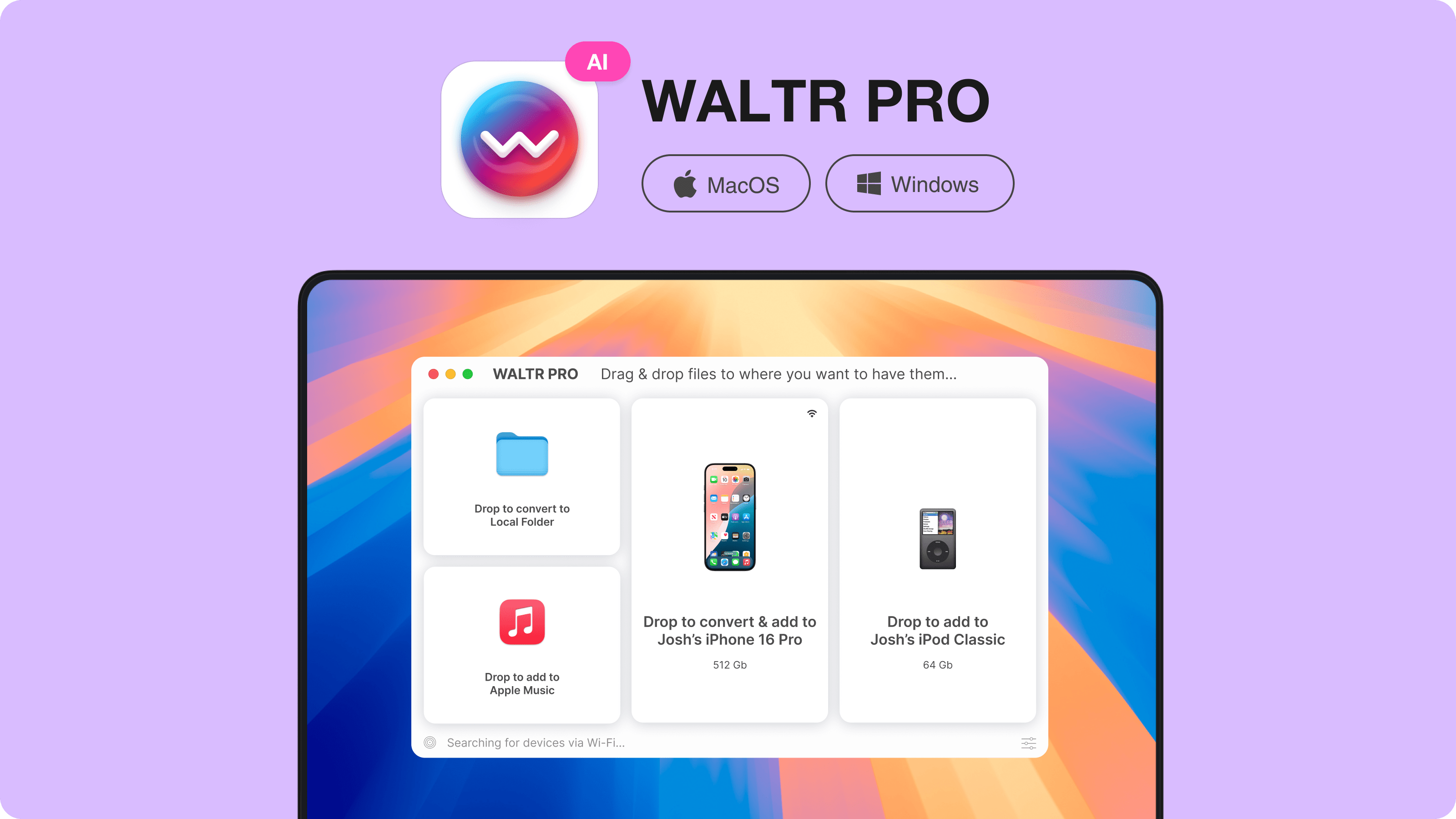
Download WALTR PRO from https://softorino.com/waltr, install it, and open the app. The trial is useful for testing the workflow, but Softorino support currently lists trial limits: 24 hours, 1 Movies file, 3 TV Shows files, 10 Books/PDF files, 10 Music files, and 2 Ringtones.
Step 2: Connect your iPhone by USB or Wi-Fi
Plug in the iPhone first, unlock it, and tap Trust This Computer. After the first setup, Wi-Fi transfer can work when both devices are on the same local network.
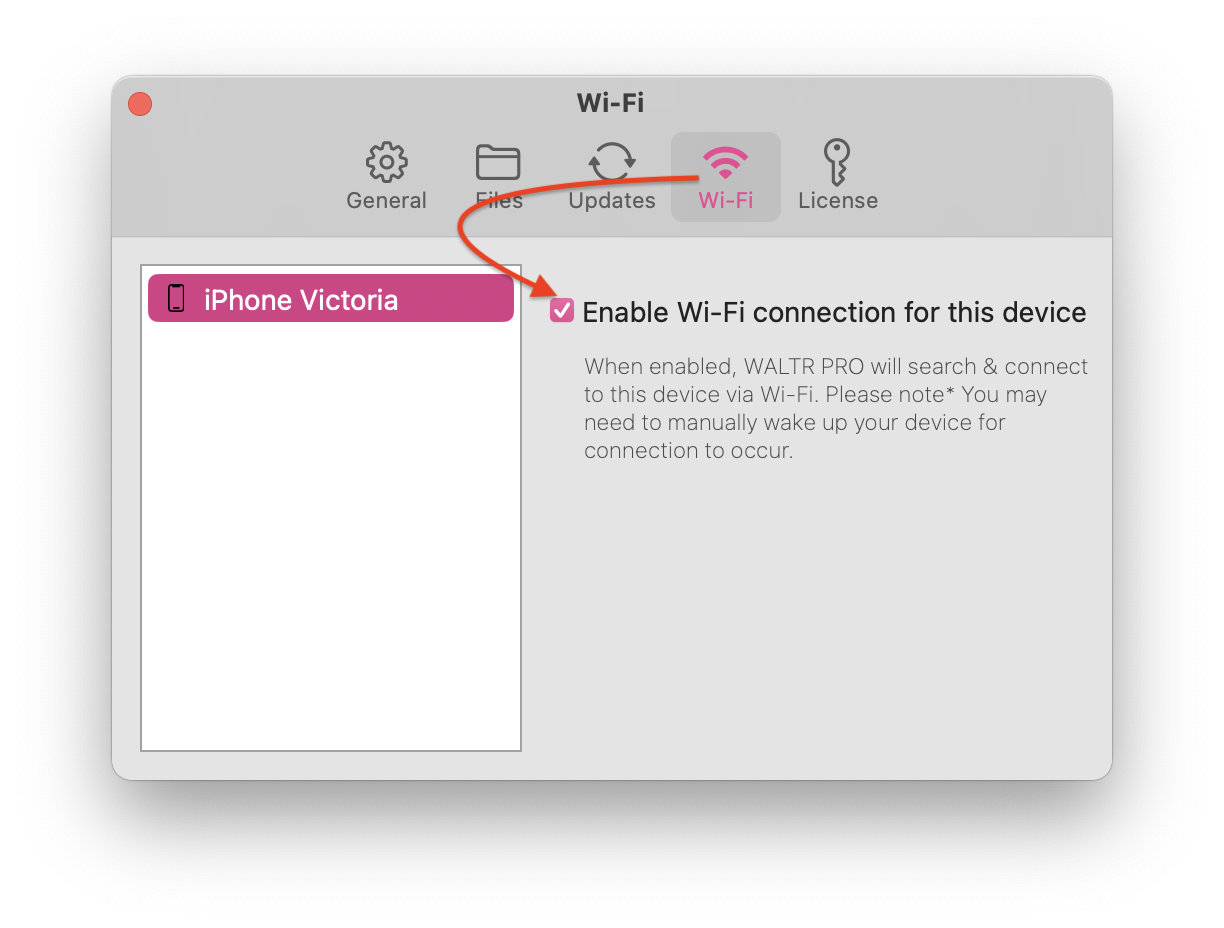
For big 4K videos, use USB. Wi-Fi discovery can be blocked by VPNs, guest networks, firewalls, or weak signal. Cloud transfer can be even slower because it uploads first and downloads later.
Step 3: Drag the video into WALTR PRO
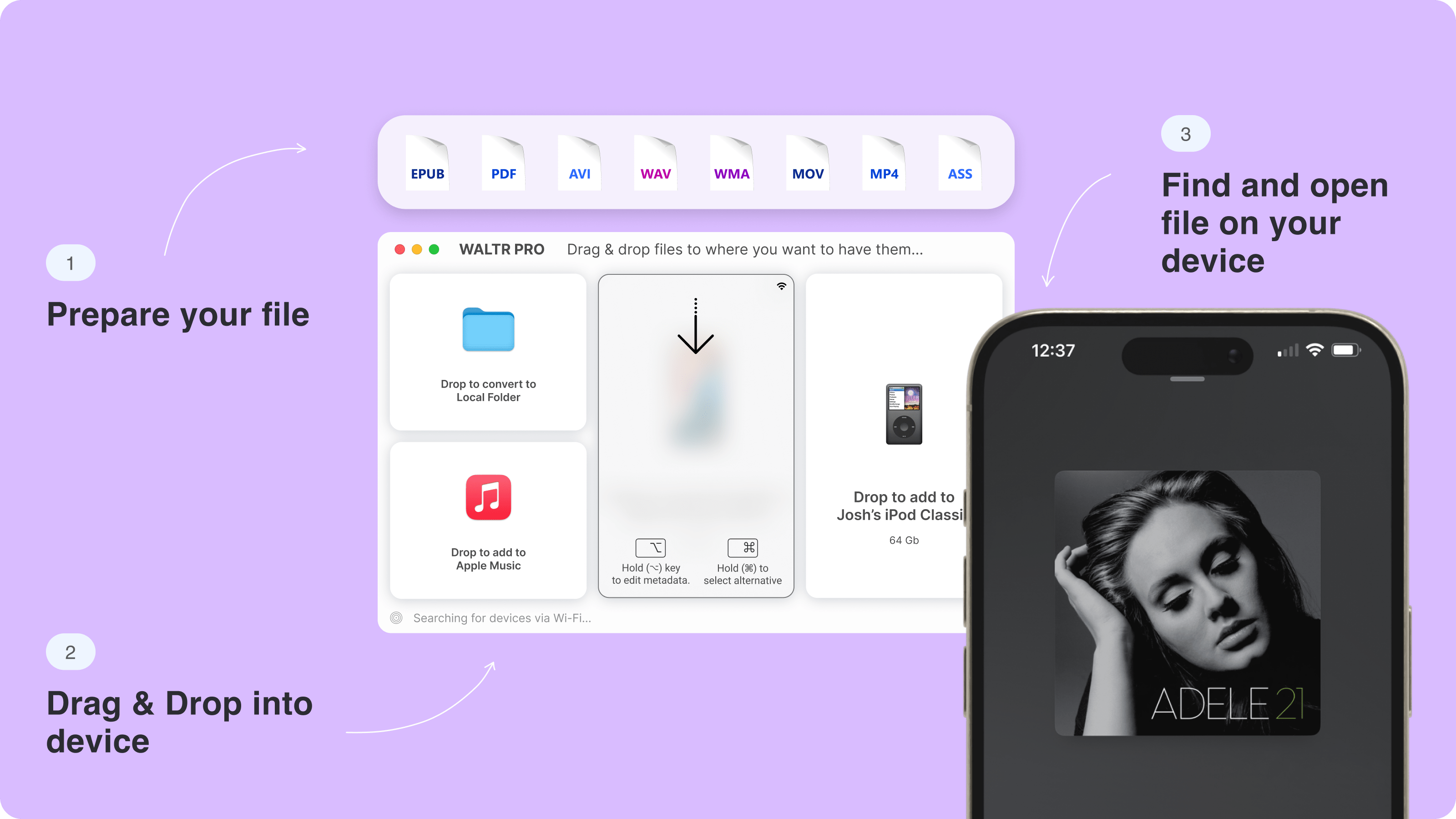
Drop the video into WALTR PRO. You do not need to import a library, make a playlist, or pick through Apple sync categories. This is the main reason to use WALTR for video transfer from PC to iPhone.
Step 4: Choose metadata or destination when needed
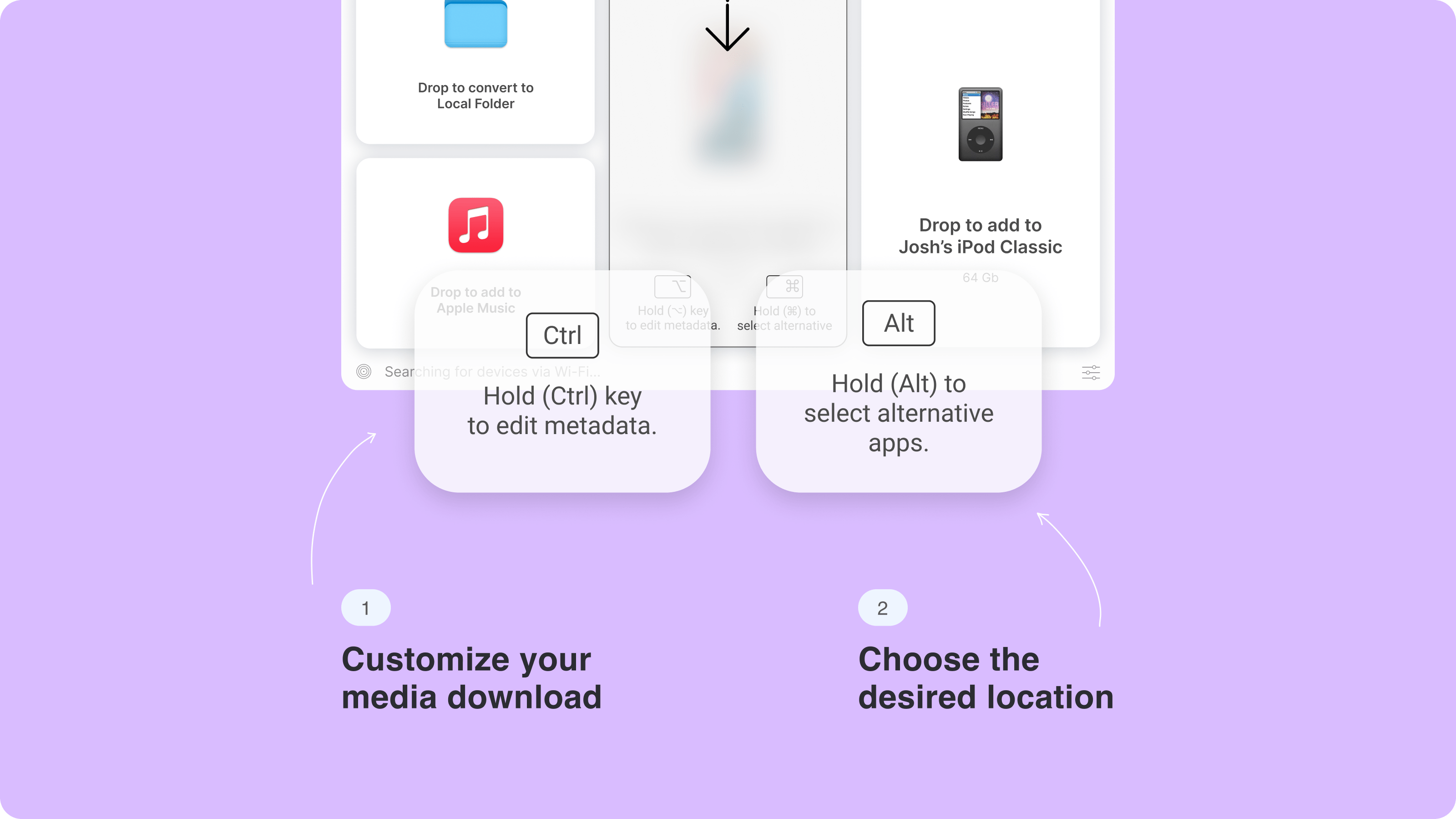
If a movie title looks messy, fix metadata before sending. If you need another destination app, use WALTR’s destination controls instead of assuming every video must go to the same place.
- Hold Ctrl on Windows or Option on Mac to edit metadata such as title, show name, or cover art.
- Hold Alt when you need to choose a different destination app or location.
Step 5: Let WALTR fill metadata if it helps
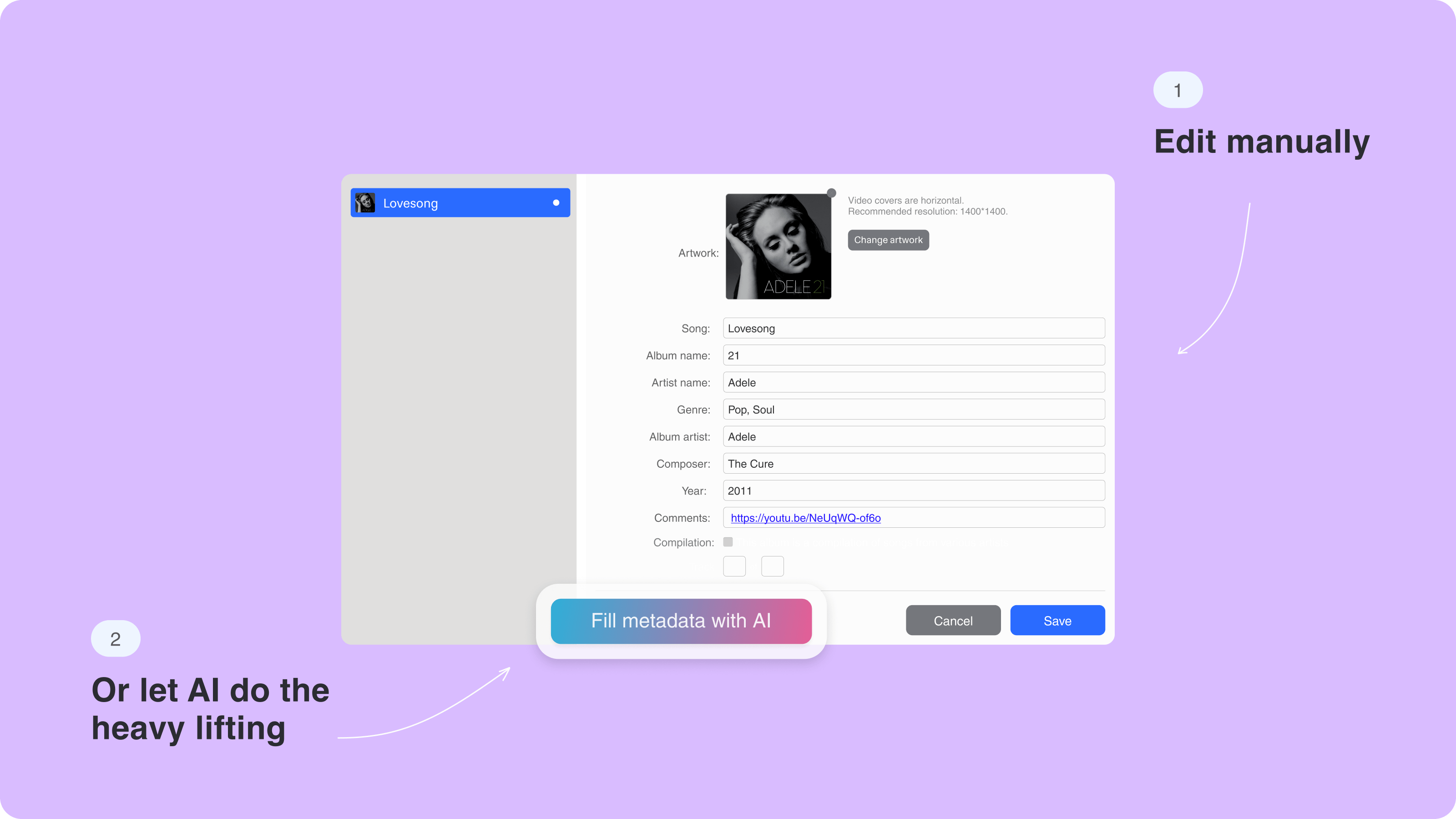
Automatic metadata is not required, but it helps when a file name looks like MOVIE_FINAL_1080p_x264.mkv. Clean titles make the iPhone library easier to use later.
Step 6: Open the video on your iPhone
After transfer, open the destination app. Softorino’s own support article says video files such as MKV appear in Videos / TV under Library → Downloaded when sent there by WALTR PRO. If you intentionally picked a different app, open that app instead.
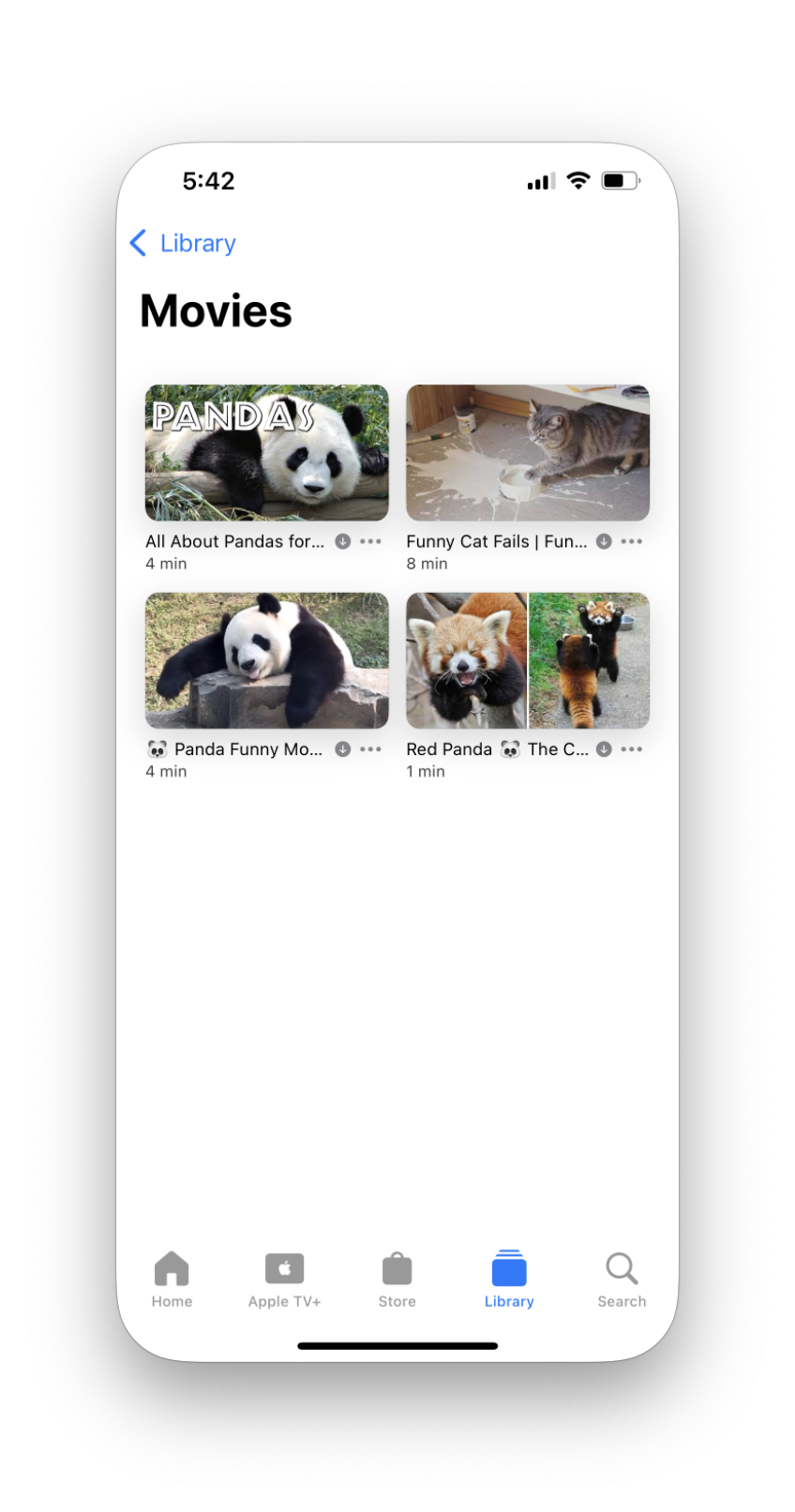
Use WALTR PRO when automatic conversion, no-iTunes transfer, and native Apple TV-style delivery matter more than using a free official tool.
Method 2: use Apple Devices for Windows
Apple Devices is Apple’s current Windows app for managing iPhone, iPad, and iPod touch. Apple says it can sync music, movies, and TV shows, and it can transfer files to apps that support file sharing.
Start here if your file is already iPhone-friendly and you want the official Windows route. Apple sync guide: https://support.apple.com/guide/devices-windows/sync-your-content-between-devices-mchlde9a31f1/windows. Apple File Sharing guide: https://support.apple.com/guide/devices-windows/transfer-files-between-your-devices-mchl4bd77d3a/windows
- Install Apple Devices from the Microsoft Store.
- Connect iPhone by USB and tap Trust on the iPhone.
- Select your device in Apple Devices.
- Choose Movies or TV Shows for sync, or Files for app file sharing.
- Add the video to the right category or app.
- Apply or transfer, then eject the iPhone before unplugging.
Main limitation: File Sharing does not put every video into Apple TV. It sends the file to the app you choose. If you select VLC, the file lives in VLC. If you sync Movies, the file must be compatible with Apple’s media workflow.
Method 3: use cloud storage for small videos
Cloud storage is fine for a short clip, work file, or video you want available across devices. It is not the fastest choice for a 20 GB movie.
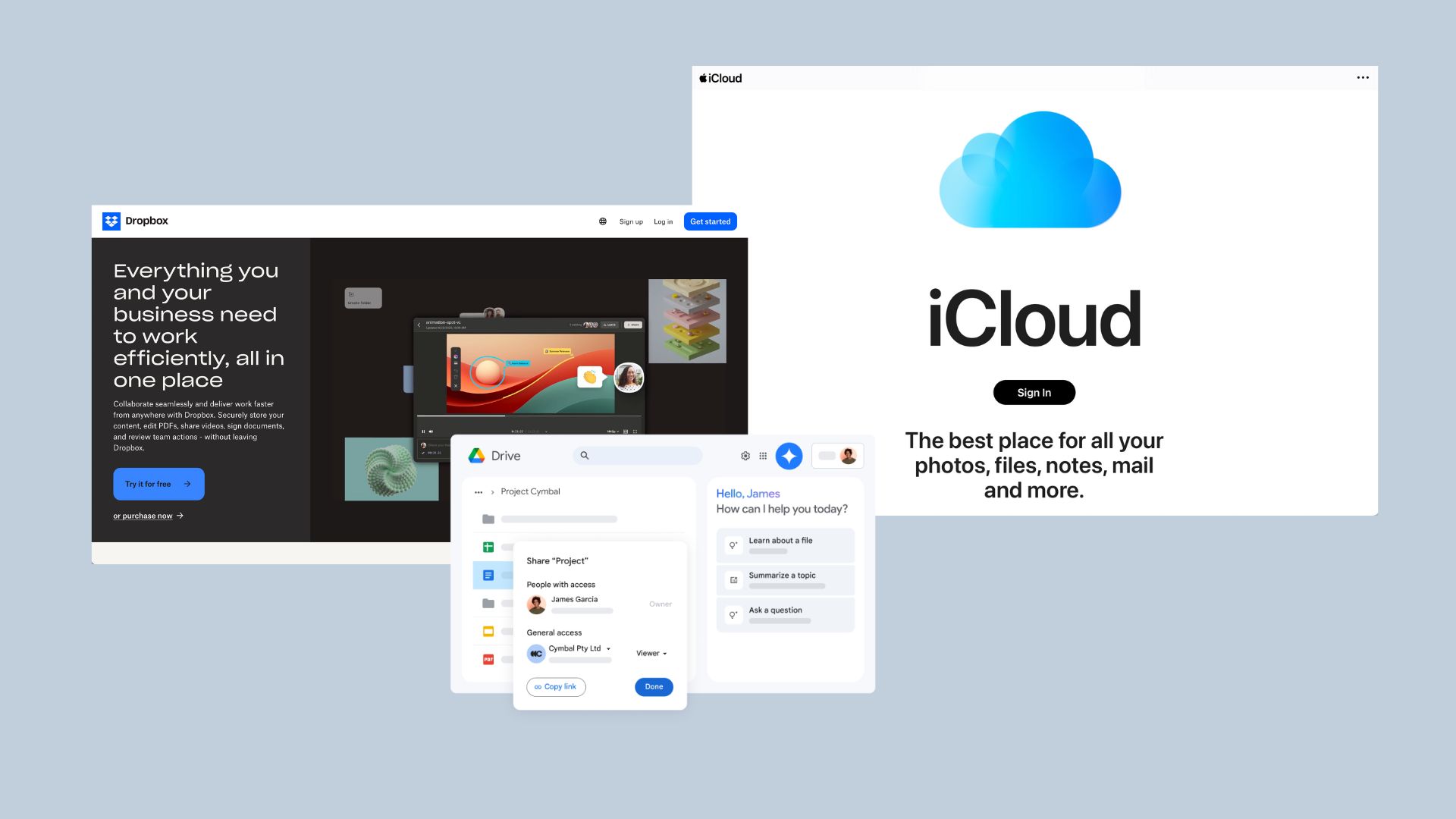
- Upload the video from your PC to iCloud Drive, Google Drive, Dropbox, or OneDrive.
- Open the same service on your iPhone, or open the file through the Files app.
- Download the video for offline use if you need it without internet.
- Save to Photos or share to a player app only if that service and format allow it.
Apple documents iCloud for Windows video upload through iCloud Photos, where you can drag photos and videos into iCloud Photos in File Explorer. That is useful for personal clips, but it still depends on iCloud storage, upload speed, and Photos compatibility.
Cloud transfer is easy to understand, but not always fast. You upload the video once, then download it again on the iPhone.
What about Windows File Explorer?
Windows File Explorer is useful for copying iPhone camera photos and videos from iPhone to PC. It is not the normal way to copy arbitrary PC videos into iPhone playback apps.
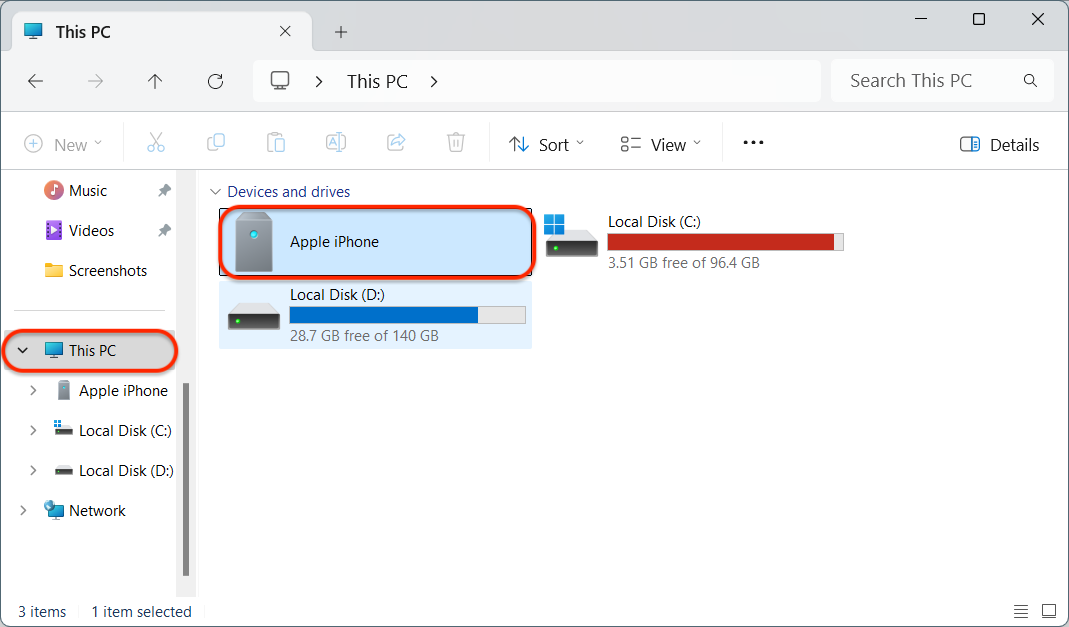
Do not rely on old advice that says to paste videos into DCIM. DCIM is the camera media area exposed for import from iPhone. Pasting random PC videos there is unreliable and does not solve Apple TV, codec, or destination problems.
Method 4: transfer videos with iTunes on Windows
iTunes is now the fallback, not the first recommendation. Use it if you already have it installed, use an older Windows setup, or need the legacy File Sharing screen.
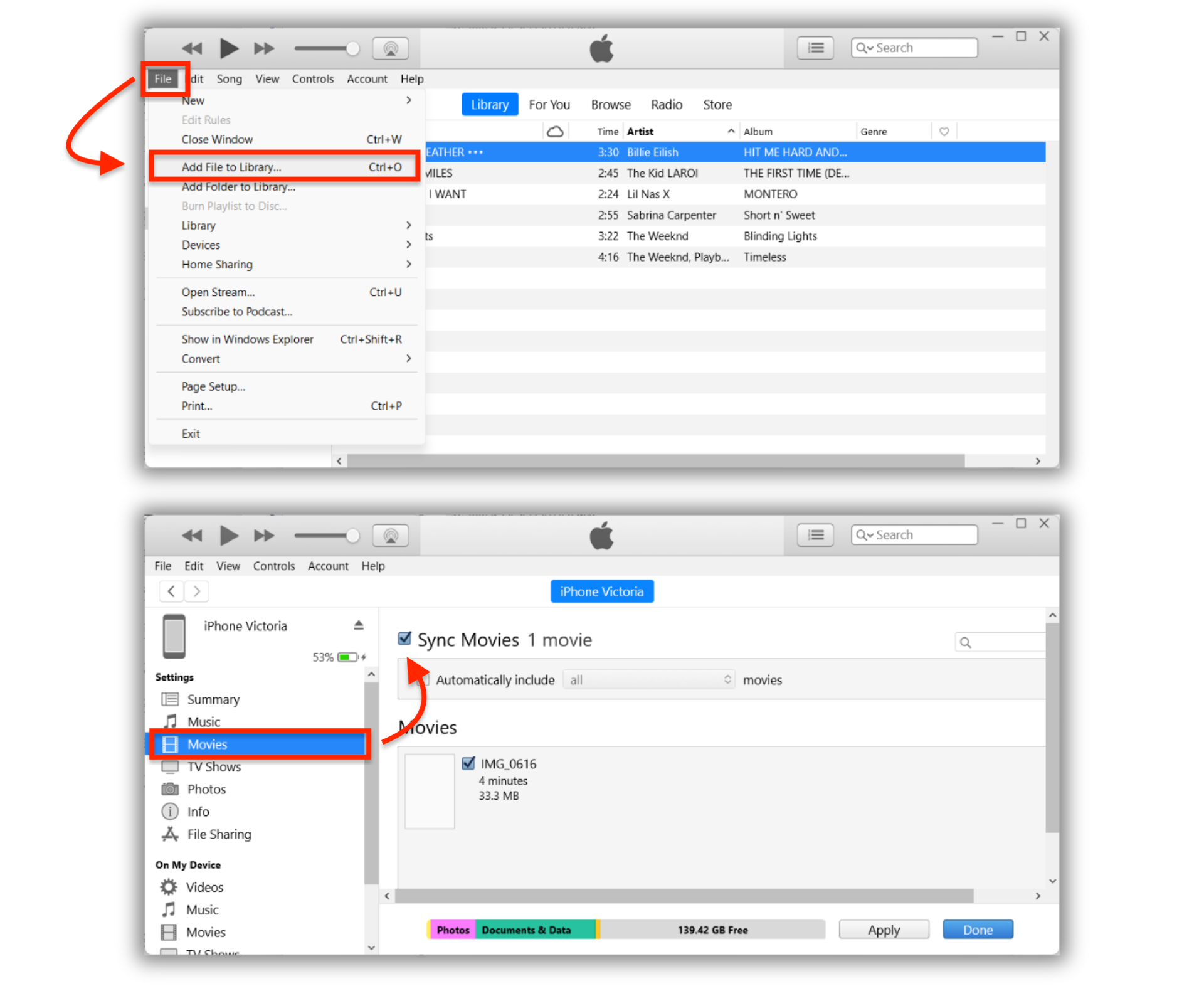
- Open iTunes on your PC.
- Add the video to your library if the file is supported.
- Connect iPhone by USB and tap Trust.
- Choose the device, then sync Movies or use File Sharing.
- Review the Apply screen before syncing so you do not replace media by accident.
iTunes can still work. The catch is the old catch: compatible formats are easier than MKV or AVI, and sync screens can reorganize existing media if you rush.
Method 5: use VLC for free app-local playback
VLC is the best free answer when you only need the video playable on iPhone and do not care whether it appears in Apple TV. It is also useful for formats Apple’s native apps may reject.

- Install VLC for iPhone from the App Store.
- Open VLC and enable Sharing via Wi-Fi if you want wireless upload.
- On the PC, open the local web address shown by VLC.
- Drag the video into the browser upload page, or use Apple Devices/iTunes File Sharing to copy it into VLC.
- Open VLC on iPhone and play the file from VLC’s local library.
VLC’s tradeoff is destination. The file is inside VLC, not your native Apple TV library. Pick VLC when free playback matters more than native placement.
Fair comparison: Apple Devices vs iTunes vs VLC vs cloud vs WALTR PRO
Method | Price | Best file types | Destination control | Weakness |
|---|---|---|---|---|
WALTR PRO | Paid after trial | MP4, MKV, AVI, MOV, WMV, MTS, WEBM, VOB, M2TS | Can route to native Apple apps or supported destinations when available | Trial limits; cannot bypass DRM; cable/Wi-Fi quality still matters |
Apple Devices | Free | Apple-friendly MP4, MOV, M4V | Sync categories or file-sharing apps | Official but slower; app/file compatibility still matters |
iTunes | Free | Apple-friendly MP4, MOV, M4V | Sync library or File Sharing | Legacy workflow; sync can affect existing media |
VLC | Free | Many odd formats for VLC playback | VLC app only | Not native Apple TV; Wi-Fi upload requires same network |
Cloud storage | Free/paid by quota | Small compatible clips and shared files | Files, cloud app, Photos, or player app | Upload/download time, storage quotas, offline access setup |
Limitations you should know before moving a big video
Codec limits: MP4 is a container. If the video or audio codec is odd, native playback can still fail.
Subtitle limits: SRT is safest. ASS and SSA can work in some workflows, but subtitle support depends on the destination app.
Storage limits: a 10 GB file needs more than 10 GB of comfortable free space during transfer and indexing.
Wi-Fi limits: local Wi-Fi transfer can fail on guest networks, VPNs, firewall rules, or weak signal.
Trial limits: WALTR PRO trial testing is limited by time and file counts, including 1 Movies file and 3 TV Shows files.
DRM limits: purchased or streaming-protected video cannot be made transferable by changing apps.
Why WALTR PRO is usually the fastest route for local movie files
Most methods make you manage the plumbing: sync tabs, file-sharing apps, cloud folders, player apps, codec errors, and where the video ended up. WALTR PRO narrows the job to one action: send the local file to the iPhone without iTunes.
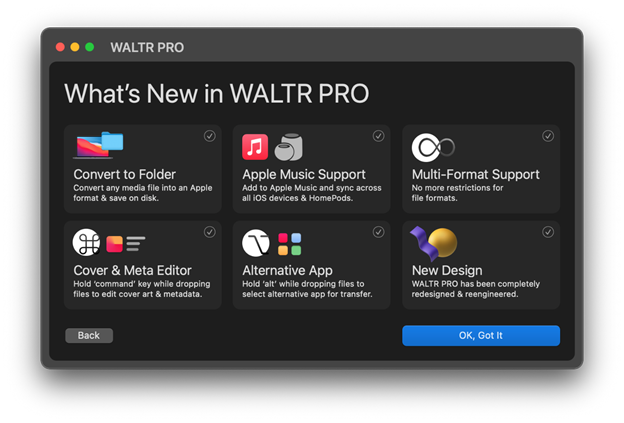
That does not make WALTR the answer for every person. Apple Devices is the right official path for compatible files. VLC is the right free path for app-local playback. Cloud storage is fine for small clips. WALTR PRO is the right answer when the video file is messy and you want the iPhone result to feel native.
If you also transfer music, PDFs, or ringtones, the same Softorino subscription covers the broader WALTR workflow. Keep this article focused on video, but it helps to know the app is not limited to movies.
Troubleshooting transfer videos from computer to iPhone problems
Your iPhone does not appear on the PC
Unlock the iPhone, reconnect the cable, and tap Trust This Computer. Try another USB port or a data-capable cable. For Apple Devices or iTunes, update the app and restart both devices.
The video transferred, but you cannot find it
Check the destination app. Apple Devices and iTunes File Sharing place files in the selected app. VLC uploads stay in VLC. Cloud files stay in the cloud app or Files unless you save or share them elsewhere. WALTR PRO can show where files went after transfer; Softorino documents this in its support article.
The video format is unsupported
Use WALTR PRO for automatic handling, convert the file to Apple-friendly MP4 before using Apple Devices, or play it inside VLC. This is common with MKV, AVI, WMV, MTS, and WEBM files.
Subtitles are missing
Keep the subtitle file name close to the video file name and use a common format such as SRT. If subtitles matter, WALTR PRO or VLC is usually safer than basic Apple sync.
Cloud storage says the file is too large
Check the cloud plan’s storage quota and the file size. Large 4K videos are easier over USB than through upload-download cloud loops.
Final recommendation
If you want the easiest way to transfer videos from computer to iPhone without iTunes, use WALTR PRO. It is the best fit for local video files, odd formats, subtitles, and people who do not want to babysit Apple sync screens.
Use Apple Devices if you want Apple’s current official Windows method. Use iTunes as a fallback. Use VLC if you want a free player app. Use cloud storage for small, occasional transfers.
Start with WALTR PRO if your video file is MKV, AVI, WMV, MTS, or another format that tends to trigger iPhone playback problems: https://softorino.com/waltr
FAQ: transfer videos from computer to iPhone
How do I transfer videos from computer to iPhone without iTunes?
Use WALTR PRO for the simplest no-iTunes method. Connect your iPhone, drag the video into WALTR PRO, and let the app send it to the right destination when supported. VLC and cloud storage also avoid iTunes, but they usually keep the file inside VLC, Files, or a cloud app.
Can I transfer MKV or AVI files to iPhone?
Yes. WALTR PRO can handle many common video formats during transfer, including MKV and AVI. VLC can also play many formats inside the VLC app. Apple Devices or iTunes may require conversion to MP4, MOV, or M4V first.
Is Apple Devices better than iTunes for Windows?
For most Windows users, yes. Apple Devices is Apple’s current Windows app for syncing and file sharing. iTunes still works as a fallback, especially on older setups, but it is not the cleanest first choice in 2026.
Where do transferred videos appear on iPhone?
It depends on the method. WALTR PRO can place videos in Videos / Apple TV or another supported destination. Apple Devices and iTunes File Sharing place files in the selected app. VLC uploads stay in VLC. Cloud transfers stay in the cloud app, Files, Photos, or another app you choose.
What is the fastest method for large videos?
Use a USB cable with WALTR PRO for the least friction. Large videos are slow over Wi-Fi and cloud storage because speed depends on file size, cable quality, local network quality, upload speed, and free iPhone storage.
Can File Explorer copy videos from PC to iPhone?
Not reliably. File Explorer is mainly useful for importing iPhone camera photos and videos to the PC. It is not a normal way to add PC video files to Apple TV, VLC, or Photos on iPhone.

WALTR PRO
Convert & Push Any File into Any Apple Device
