What Happens If I Delete iCloud Backup? 2026 Answer

What happens if I delete iCloud backup?
Quick answer: Deleting an iCloud backup removes the selected restore copy, not the current data on your iPhone. Separately synced iCloud data stays too. You cannot restore from that deleted backup later. Deletion also turns off iCloud Backup for that device. Finish and verify another backup before removing your only restore copy.
Before we begin
Windows users can download AltTunes to make local iPhone backups or export selected photos, messages, and contacts. Exports alone are not a full-device recovery backup. Check backup completion separately from opening exported files. AltTunes does not delete or recover remote iCloud backups.
What deleting iCloud backup removes
Quick Takeaways: what stays and what disappears
Deleting an iCloud backup removes one saved restore point. The table separates that copy from current device data and separately synced iCloud data. It does not mean every cloud file is downloaded on your iPhone.
Removed or lost | Unaffected by deleting this backup |
|---|---|
The selected iCloud Backup | Current data on your iPhone |
App data and settings stored only in that backup | Apps and settings currently on the device |
The option to restore from that exact backup | Separately synced iCloud Photos, Messages, Contacts, and Drive files |
The storage used by that backup in iCloud | Storage used on your iPhone |
You can delete an old iCloud backup without erasing current iPhone data. Keep it if it holds the only copy of information you still need.
A backup from a lost or broken phone may be your only restore path. Its age alone does not make it safe to delete.
What deleting an iCloud backup does not delete
Backup and sync protect different things. A backup stores information for restoring a device. Sync keeps supported data up to date across your devices.
Apple explains that iCloud Backup copies information not already synced to iCloud. iCloud Photos and Messages in iCloud store their data separately when those services are on.
Deleting a device backup does not delete those synced libraries. But sync is not an independent historical copy that protects against every deletion.
Warning: Deleting a photo within iCloud Photos or a file within iCloud Drive is a separate action. That deletion can sync to your other devices. Do not delete synced content as though it were an old device backup.
If data exists only inside the deleted backup, you lose that restore copy. This may include old app data, device settings, Home Screen layout, or photos and messages that were not synced separately.
Apple documents these controls in its guides to managing iCloud storage and viewing and managing device backups. Check which service holds your data before removing anything.
- If iCloud Photos is on, your photos sync through iCloud Photos. Deleting an iCloud Backup does not delete those photos.
- If Messages in iCloud is on, your messages sync separately. Deleting the backup does not delete those messages.
- If Contacts sync with iCloud, deleting the backup does not wipe your contacts.
- If files live in iCloud Drive, deleting the backup does not delete those files.
What happens when I delete iCloud backup for an old iPhone?
Delete an old iPhone backup only after you have finished migration and checked the data you still need. A backup from a device you no longer own can still contain files or app data worth keeping.
Check the device name, backup date, and whether the replacement phone has the data you need.
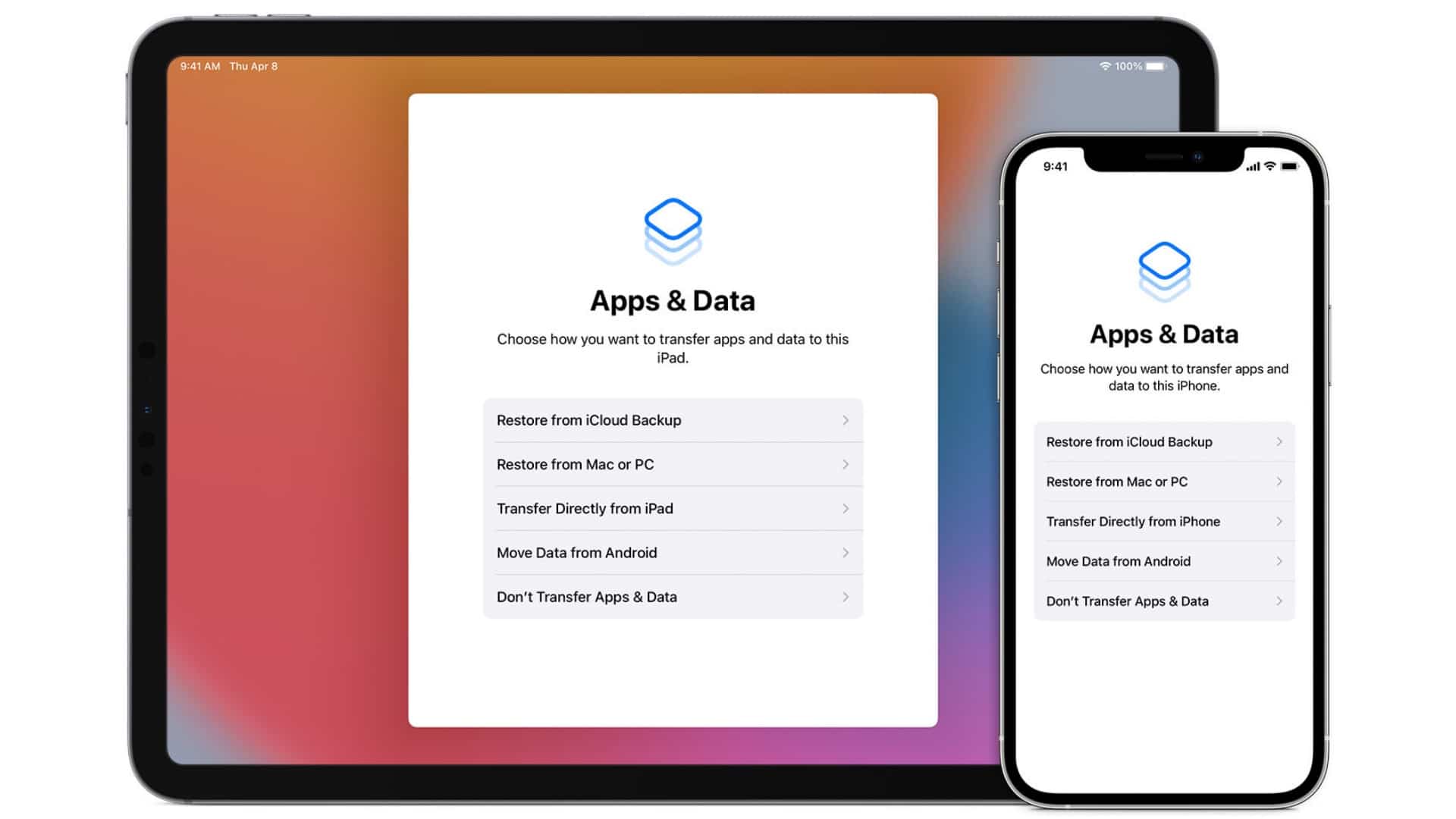
Keep the backup while moving to a new iPhone. Apple says backups currently being used to restore a device cannot be deleted. Wait until setup and your checks are complete.
- Confirm the backup belongs to the intended old iPhone, not your current phone.
- Check that you no longer need its app data or settings for a restore.
- Verify another copy of important data and complete a replacement backup if you still need device recovery.
Will deleting iCloud backup delete photos, messages, or contacts?
No, deleting an iCloud backup does not delete current photos, messages, or contacts from your iPhone.
Your sync settings decide which recovery copy you lose, not whether deleting the backup erases current phone data.
Photos with and without iCloud Photos
If iCloud Photos is on, photos sync outside the device backup. Deleting the iCloud Backup does not delete them.
If iCloud Photos is off, some photos may only exist on your iPhone and inside the backup. Deleting the backup still does not remove the photos from the iPhone, but it removes one recovery copy.
Messages with and without iCloud sync
If Messages in iCloud is on, messages sync separately. Deleting the backup does not delete them.
If Messages in iCloud is off, messages may be part of the device backup. Deleting the backup removes that restore copy, not the messages currently on your iPhone.
Contacts synced through iCloud or another account
If Contacts sync with iCloud, deleting the backup does not delete contacts. They live in iCloud sync, not only inside the iPhone backup.
Deleting the device backup also leaves contacts from other accounts and contacts stored locally on your iPhone untouched. Check the account holding your contacts before changing its sync settings.
Why would you delete an iCloud backup?
Removing an unneeded backup frees iCloud space. It does not create more storage on your iPhone.
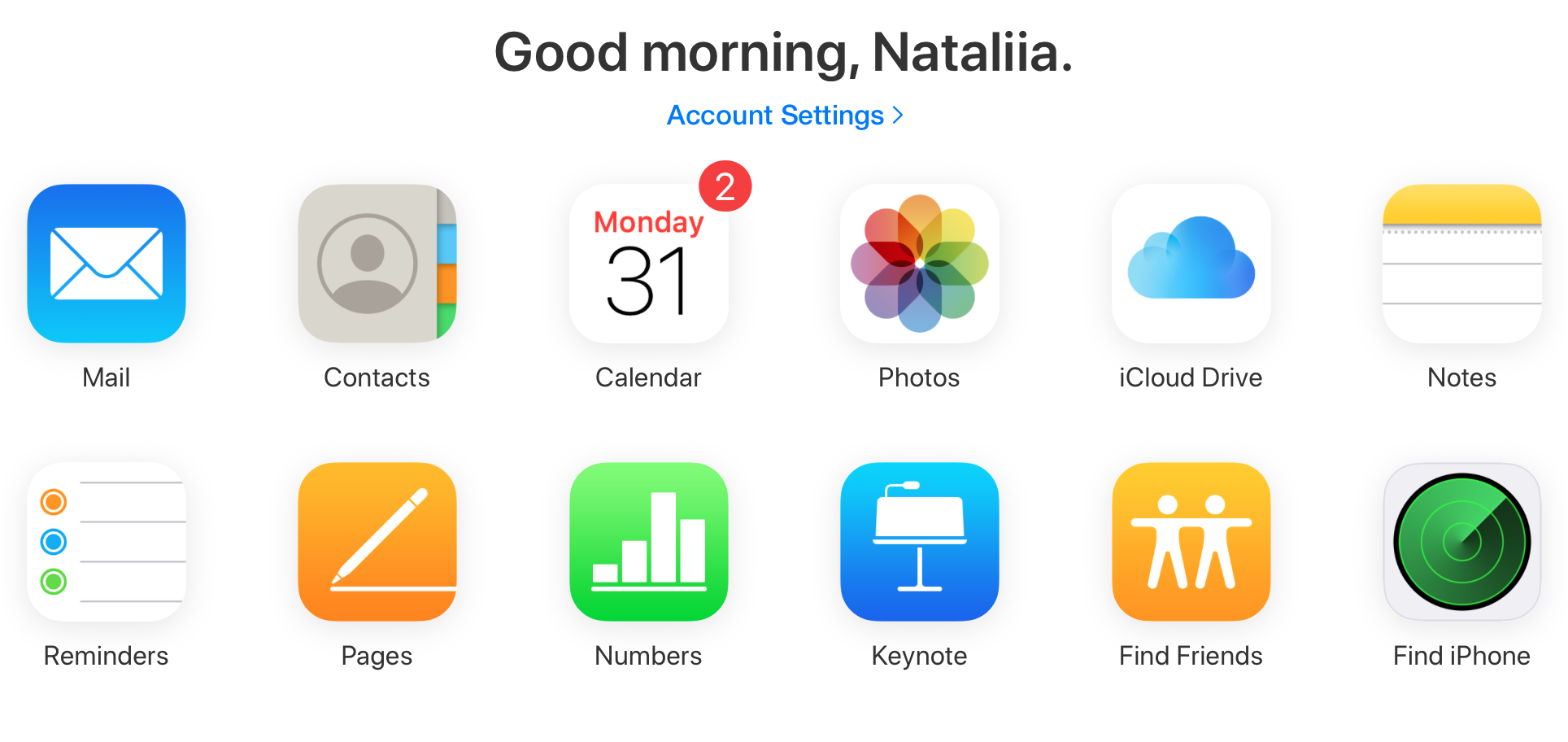
Apple includes 5GB of free iCloud storage. Device backups, iCloud Photos, and other iCloud data share that allowance. The illustration above relates to cloud recovery, not freeing local phone storage.
If your iPhone is full, review its local storage separately. Check where photos and files are synced before deleting them.
Consider removing an old device backup in these cases:
- You finished moving to a new iPhone, checked the transferred data, and no longer need the old restore point.
- You have a completed replacement backup and no longer need this saved copy.
- You want to reduce cloud storage use and have verified another recovery plan.
What happens if I delete iCloud backup too soon?
You lose the restore copy before you know whether you still need it. Use this quick safety check before deleting anything.
If iCloud storage is full, review large backup categories or consider more iCloud storage before deleting your only restore copy. Turning off backup for an app removes its backup data too; keep another copy of anything important.
- Check the device name. Make sure you are deleting the old iPhone or iPad backup, not your current one.
- Check the backup date. A recent backup may be your only clean restore point.
- Check your photos. If iCloud Photos is off, save important photos somewhere else first.
- Check messages. If Messages in iCloud is off, consider making a local backup before deleting the cloud one.
- Check app data. Some apps store data locally and depend on device backups for restore.
- Make a local backup. Use Finder on Mac or Apple Devices on Windows. Use iTunes only on supported systems without Apple Devices or on older macOS.
- Keep the backup during device migration. Delete only after the new phone is set up and checked.
How to delete an iCloud backup from iPhone
Use Settings to remove the selected device backup after checking you no longer need it. Older screenshots below are illustrations; labels can differ from your current software.
- Open Settings on your iPhone or iPad.
- Tap your name at the top.
- Tap iCloud.
- Tap Storage or Manage Account Storage.
- Tap Backups.
- Choose the device backup you want to delete.
- Tap Turn Off and Delete from iCloud.
- Confirm with Turn Off and Delete.
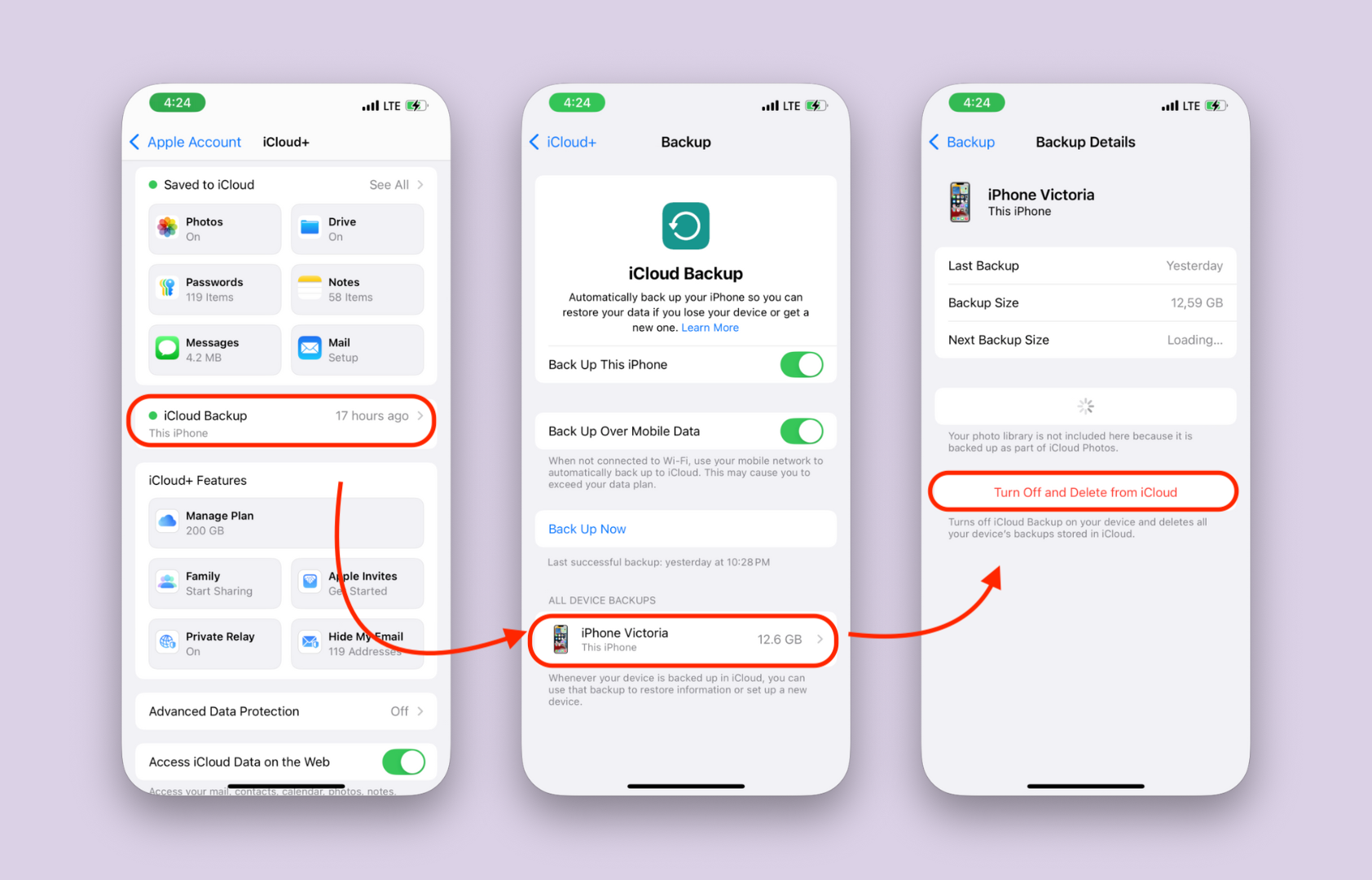
Turn Off and Delete removes the backup and switches off iCloud Backup for that device. It does not erase the current iPhone. The screenshot shows Apple’s alternate route through iCloud Backup, then the device, rather than the Storage route above.
For future backups, open Settings > your name > iCloud > iCloud Backup and turn backup on again. Complete a fresh backup once you have enough iCloud space, then check the latest successful backup time.
How to delete iCloud backup from Mac
Use System Settings on current macOS. These controls delete the cloud backup, not a Finder backup stored on your Mac.
- Open the Apple menu.
- Click System Settings.
- Click your name.
- Click iCloud.
- Click Manage.
- Click Backups.
- Select the device backup.
- Click Delete and confirm.
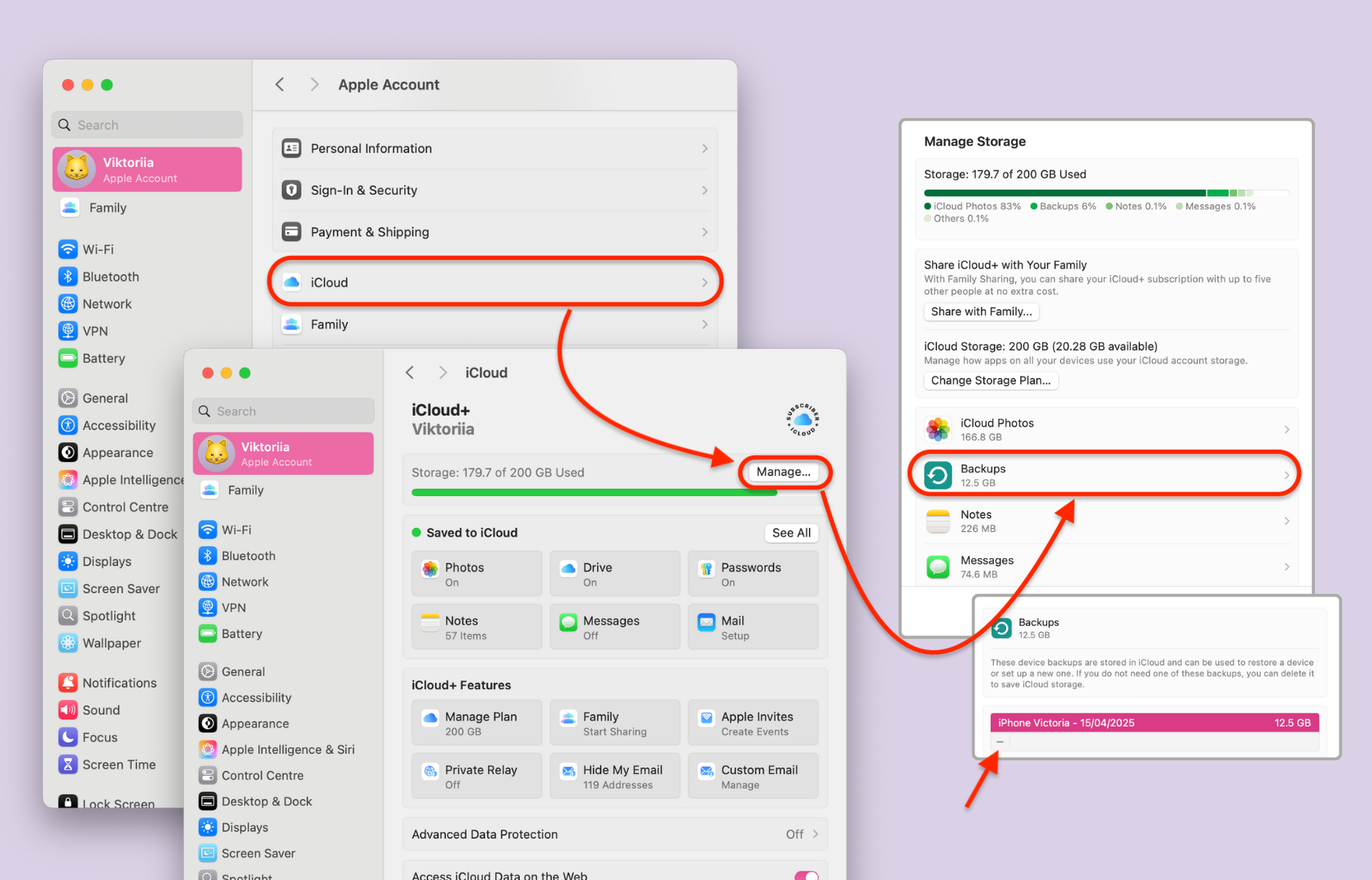
The older screenshot may show System Preferences and Apple ID. On current macOS, follow System Settings, your name, iCloud, then Manage and Backups.
How to delete iCloud backup from Windows PC
Use iCloud for Windows to delete an iCloud backup. Apple Devices handles local PC backups instead. The preserved Windows screenshots illustrate the storage-management workflow.
- Open iCloud for Windows.
- Click Storage.
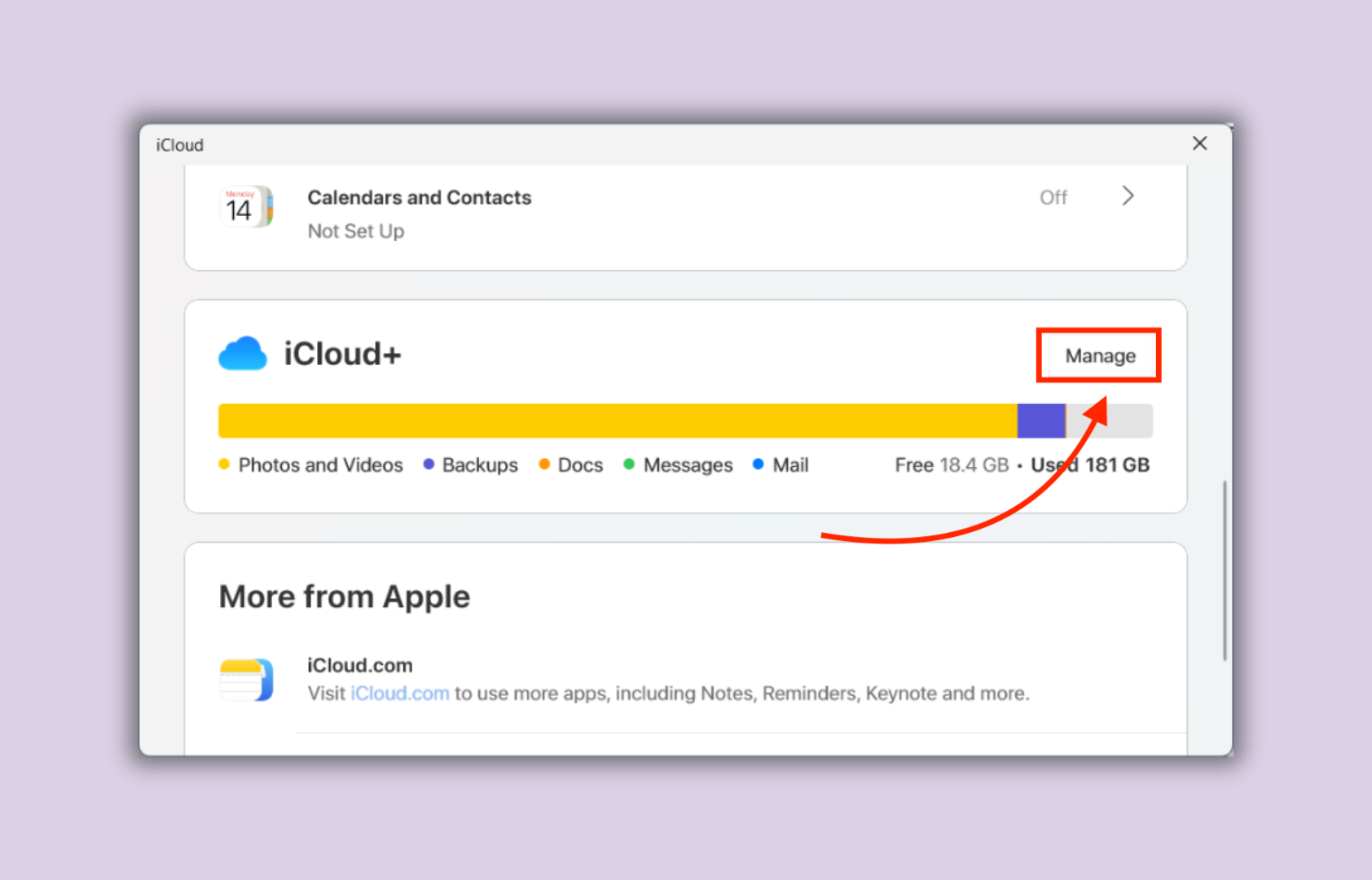
- Select Backups from the list.
- Choose the device backup you want to remove.
- Click Delete.
- Confirm.
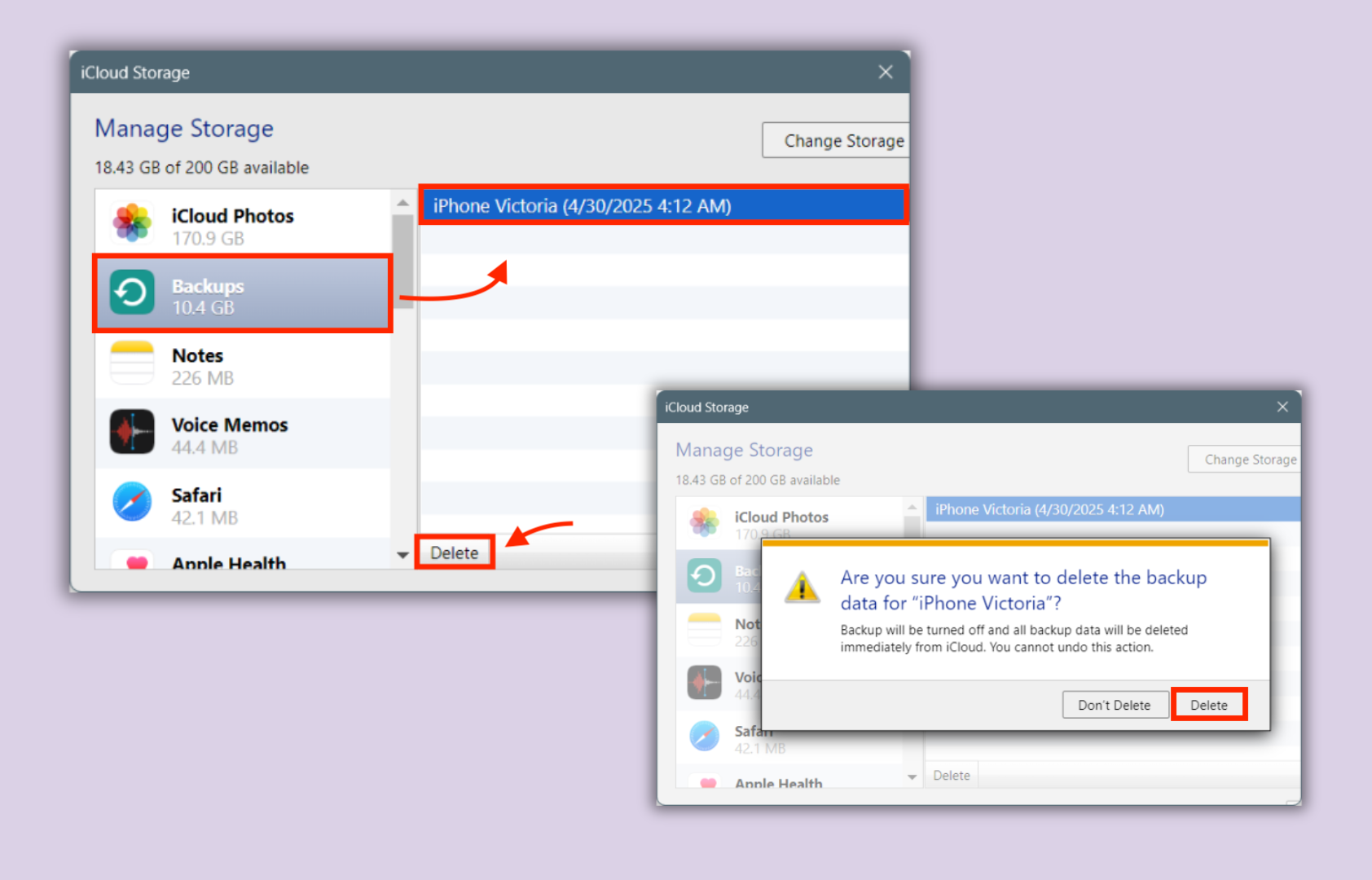
For a replacement local backup on Windows, use Apple Devices. Apple still documents iTunes for PCs without Apple Devices. Neither path makes a deleted iCloud restore point available again.
How to create a local backup without relying on iCloud
Make a completed computer backup before deleting an important iCloud restore copy. Exporting selected photos or messages is useful, but does not replace a device backup. See the focused guide to backing up iPhone without iCloud.
Use Finder on Mac or Apple Devices on Windows for Apple’s local backup route. Apple requires encryption to include Health and Activity data. Keep the encryption password: you need it to use that encrypted backup later.
For Windows backup management and selected-file exports, AltTunes is another option. Choose based on whether you need a restore copy, readable exports, or both.
AltTunes is Softorino’s Windows iPhone manager. Its product documentation describes local backups, choosing a backup location, and exporting photos, messages, music, and contacts. This guide uses official documentation; no new on-device testing took place.
Create a local iPhone backup with AltTunes
Use AltTunes for local backup management or selected exports on Windows. The following workflow is documentation-based. Check support for your device and software version before relying on a backup.
- Download and install AltTunes on your Windows PC.
- Connect your iPhone with a USB cable and open AltTunes.
- For a device recovery copy, use the backup workflow and choose where to save it.
- Wait for completion and check that the backup record matches your iPhone and date.
- For readable copies of selected data, export the supported categories you need and open those files on the PC.
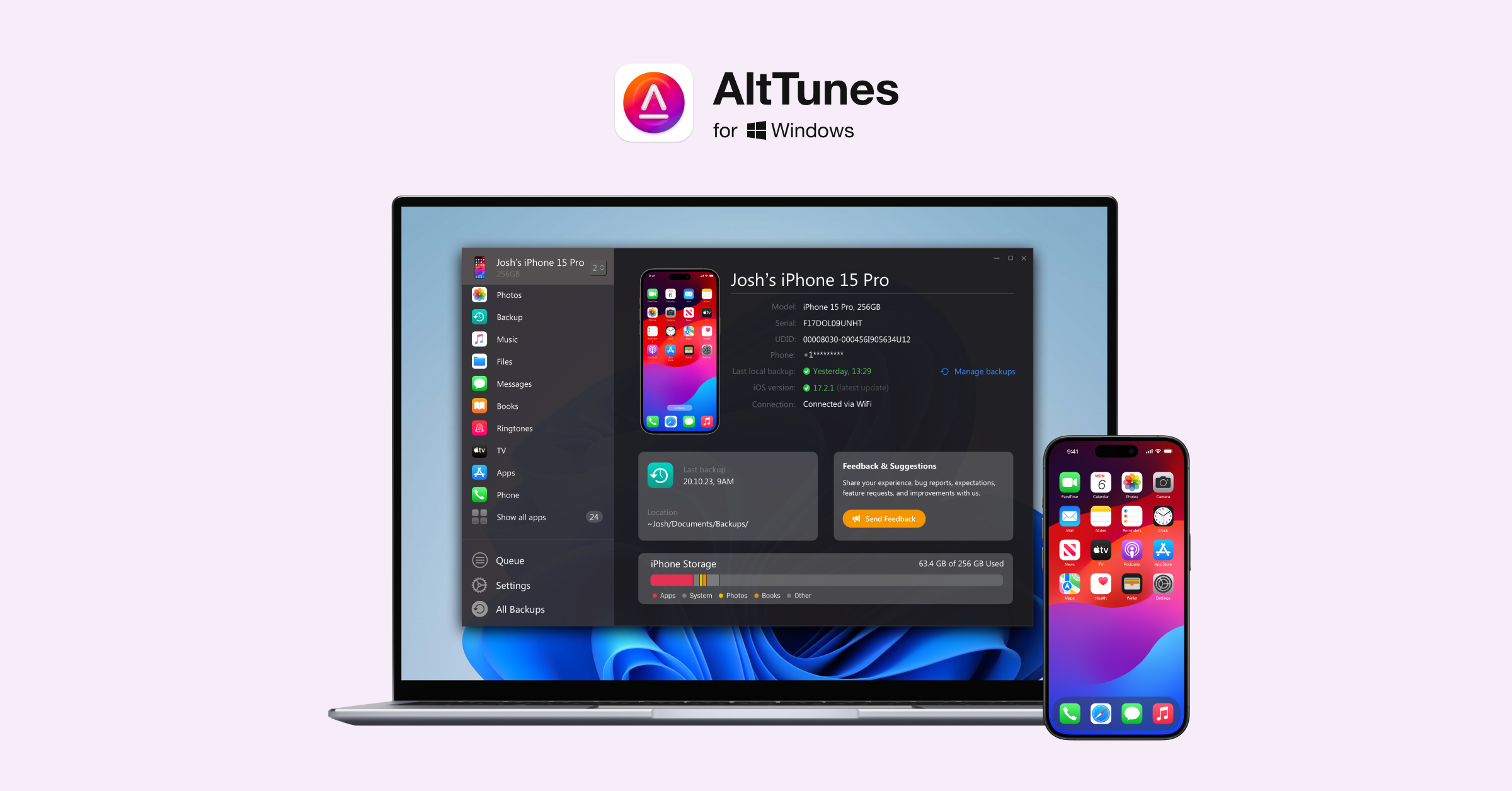
AltTunes does not manage deletion of remote iCloud backups. Its local backup and export functions are separate jobs. The preserved product images illustrate those jobs, not a newly verified restore.
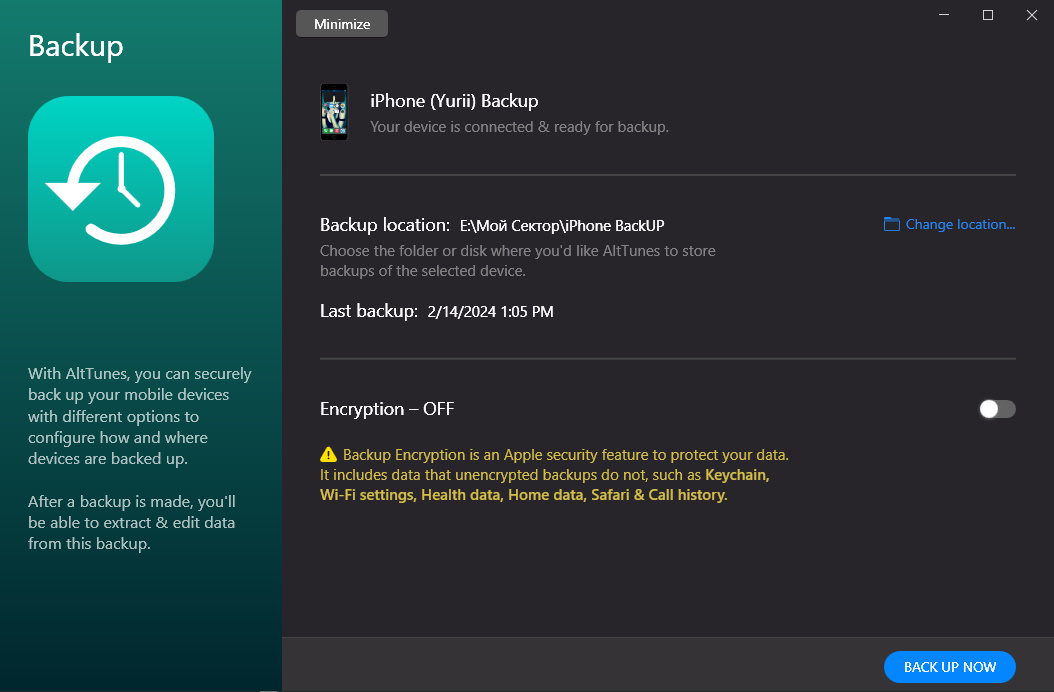
Check local backups and exported files separately. A folder containing exported photos does not prove you can restore app data and settings.
For file-level access, see how to view iPhone backup files. Use these checks before removing your cloud restore point:
Confirm the saved backup belongs to the correct iPhone.
Check the backup completion date and storage location.
Keep any required encryption password somewhere you can retrieve it.
Open exported files to verify those individual copies.
Back up with Finder or Apple Devices
Apple’s Windows backup instructions use Apple Devices, or iTunes when Apple Devices is unavailable. For the Mac route and more detail, see our iPhone backup guide.
- Connect your iPhone to your Mac or Windows PC. Unlock it and accept a Trust prompt if shown.
- Open Finder on macOS Catalina or later, or Apple Devices on Windows. Use iTunes on a supported older Mac or PC without Apple Devices.
- Select your iPhone. Open General in Finder or Apple Devices, or Summary in iTunes.
- Select the option to back up your iPhone data to this computer.
- Select Encrypt local backup if you need Health and Activity data included. Save the password.
- Click Back Up Now and wait for completion.
- Check the latest backup date and time before deleting the iCloud backup.
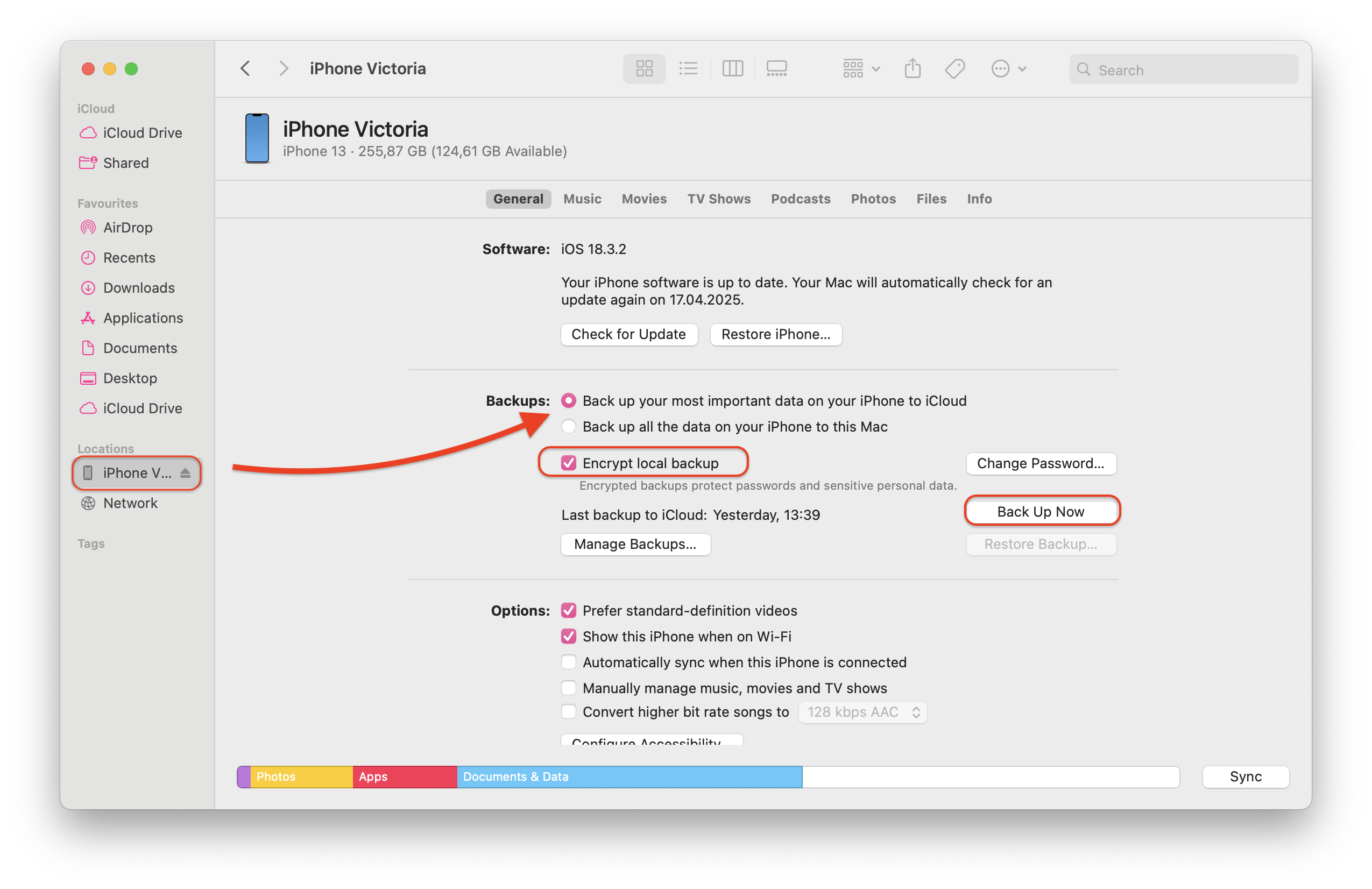
The older Finder screenshot still has the iCloud option selected. For a local backup, choose Back up all of the data on your iPhone to this Mac instead. Then click Back Up Now and check completion. Local computer backups and iCloud backups are separate copies.
Should you delete old iCloud backups?
Delete an old iCloud backup only when you no longer need its restore point and have verified another copy of the information you need.
Apple says it keeps backups for 180 days after you turn off iCloud Backup or stop using it. That is not an undo window for a backup you manually delete.
Keep the existing backup if any of these situations applies:
- You are moving to a new iPhone.
- Your current iPhone has not backed up anywhere else.
- You may need old app data or settings.
- The backup belongs to a device you lost or broke.
- You are not sure what is inside it.
FAQ
If I delete iCloud backup will I lose everything?
No. Deleting an iCloud backup does not erase current iPhone data or separately synced iCloud data. You lose the selected restore copy. Anything that exists only in that backup will no longer be available from it.
Will deleting iCloud backup delete photos?
No, deleting an iCloud backup does not delete photos from your current iPhone. If iCloud Photos is on, photos sync separately. If iCloud Photos is off, the photos stay on the iPhone, but you lose the backup copy stored in that deleted backup.
Will deleting iCloud backup delete messages?
No, deleting an iCloud backup does not delete current messages from your iPhone. If Messages in iCloud is on, messages sync separately. If it is off, deleting the backup removes one restore copy of those messages.
Does deleting iCloud backup delete contacts?
No. Contacts usually sync through iCloud or another account. Deleting the iCloud backup does not wipe contacts from your iPhone.
Does deleting iCloud backup free iPhone storage?
No. Deleting an iCloud backup frees iCloud space, not iPhone storage. Review local downloads and apps separately, and check sync settings before deleting photos or files.
What happens if iCloud Backup turns off after deletion?
Your iPhone will stop making new iCloud backups until you turn iCloud Backup back on. Go to Settings > your name > iCloud > iCloud Backup and turn it on again if you want new cloud backups.
Can I recover a deleted iCloud backup?
Treat a manually deleted iCloud backup as gone. Apple’s 180-day retention rule concerns stopping backups, not undoing manual deletion. If the phone still has your data, make a fresh backup before erasing or replacing it.
Can I delete old iPhone backups from iCloud?
Yes, after completing migration and checking you no longer need the old restore point. Verify the device name, backup date, and another copy of anything important before deleting an old iPhone backup.
Should I back up iPhone without iCloud first?
Yes, if you still need a recovery copy of the device. Use Finder on Mac or Apple Devices on Windows, then check backup completion. Selected-file exports alone do not replace that backup.
Final answer
What happens if I delete iCloud backup? You delete the restore copy stored in iCloud. You do not delete the current data on your iPhone.
Keep the backup if it is your only recovery copy. An old device name or a full storage warning is not enough reason to delete it.
Finish and verify a replacement backup before deleting an important cloud copy. For local backup management and selected exports on Windows, download AltTunes. Use Apple Devices if you prefer Apple’s Windows backup workflow.

AltTunes
Seamlessly Browse, Manage & Export iOS Data
